What Is the Difference Between GEO and Traditional SEO?
If you’re hearing the term GEO more often lately, you’re not alone. As AI search tools grow, many marketers are trying to understand how Generative Engine Optimization (GEO) compares to traditional SEO.
In simple terms, the difference comes down to where your content appears and how users discover it.
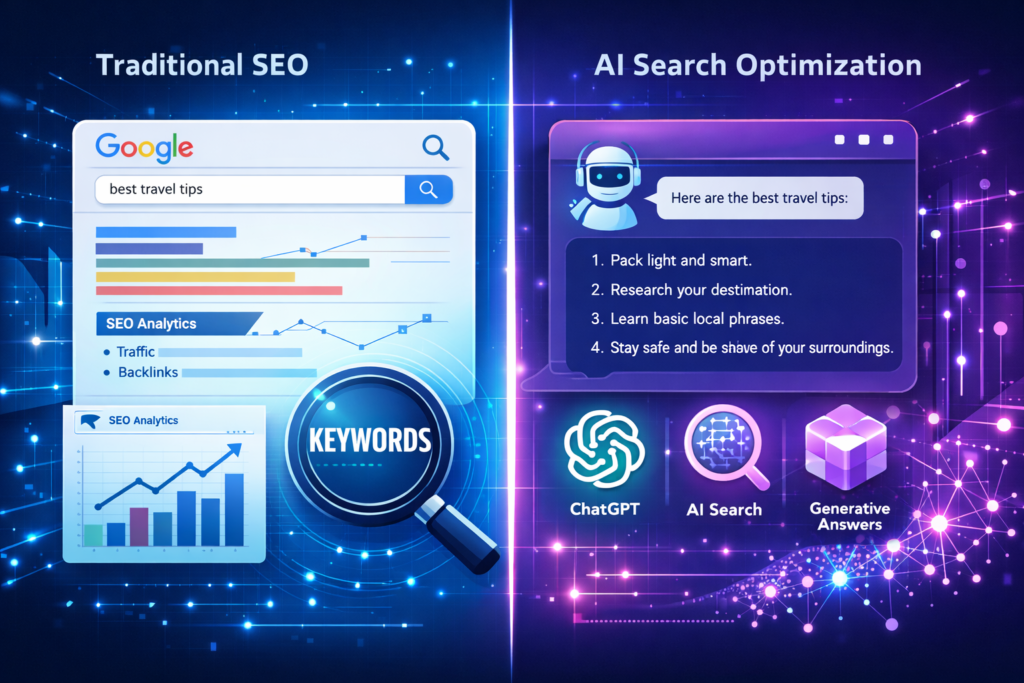
Traditional SEO focuses on helping webpages rank on search engines like Google and Bing. The goal is to appear on the search engine results page (SERP) when someone searches for a keyword. This involves optimizing elements like keywords, backlinks, technical SEO, and content quality.
GEO (Generative Engine Optimization), on the other hand, focuses on making your content visible inside AI-generated answers. Instead of showing a list of websites, AI tools such as ChatGPT, Gemini, and Perplexity generate direct responses to users’ questions. GEO aims to make your content credible and structured enough to be referenced by these AI systems.
Here’s a quick way to understand the difference:
- Traditional SEO: Optimizing content to rank on Google search results.
- GEO: Optimizing content so AI search engines reference it when generating answers.
Both approaches aim to increase visibility, but the discovery path is different. Traditional SEO drives users to click on links in search results, while GEO focuses on becoming part of the information AI models present directly to users.
As AI search continues to evolve, many websites are now combining traditional SEO strategies with GEO techniques to stay visible across both search engines and AI-powered platforms.
What Is Traditional SEO?
Traditional SEO (Search Engine Optimization) is the process of optimizing a website so it ranks higher in search engines like Google and Bing when people search for specific keywords.
The main goal of traditional SEO is simple:
get your webpage to appear on the first page of search results so users click on it.
When someone types a query such as “what are backlinks” or “best AI tools for students”, search engines analyze millions of pages and rank the most relevant ones on the search engine results page (SERP).
Traditional SEO helps your content become one of those pages.
Key Elements of Traditional SEO
Traditional SEO relies on several core ranking factors:
1. Keyword Optimization
Content must include the keywords people search for so search engines understand what the page is about.
2. High-Quality Content
Search engines prioritize content that clearly answers the user’s question and provides useful information.
3. Backlinks
Links from other websites signal authority and trust, helping pages rank higher.
4. Technical SEO
Website speed, mobile friendliness, structured data, and proper indexing all affect rankings.
5. User Experience
Search engines analyze how users interact with your page, including bounce rate and time spent on the page.
Example of Traditional SEO in Action
If someone searches:
“best free SEO tools”
Google will show a list of blog posts, guides, and tool pages related to that keyword. Websites compete to rank in the top positions because higher rankings usually mean more clicks and more traffic.
This is why traditional SEO has been the core digital marketing strategy for websites for more than two decades. Businesses optimize their content so it appears when users search for relevant queries.
However, with the rise of AI-powered search tools, the way people discover information online is starting to change — which is where Generative Engine Optimization (GEO) comes in.
What Is GEO (Generative Engine Optimization)?
GEO (Generative Engine Optimization) is the process of optimizing content so it appears in AI-generated answers from tools like ChatGPT, Google Gemini, Perplexity, and other AI search assistants.
Unlike traditional SEO, where users see a list of websites and choose which one to click, AI search engines often generate a direct answer to the user’s question by analyzing information from multiple sources.
The goal of GEO is to make your content reliable, structured, and authoritative enough for AI systems to reference when generating responses.
How GEO Works
AI search engines use large language models to analyze information across the internet. Instead of ranking pages based only on keywords and backlinks, these systems try to find clear, trustworthy, and well-structured content that can help answer a question.
Content that performs well in GEO typically includes:
- Clear explanations and direct answers
- Structured headings and sections
- Factual information and statistics
- Credible sources and references
- Strong topical authority
When content meets these criteria, AI tools may summarize or reference it when responding to users’ questions.
Example of GEO in Action
If someone asks an AI assistant:
“What is the difference between GEO and traditional SEO?”
Instead of showing ten blue links like Google search results, the AI may generate a complete explanation directly in the chat interface.
That answer is often built from multiple trusted sources across the web. If your content is structured well and considered reliable, it has a higher chance of being included in the AI-generated response.
Why GEO Is Growing Fast
The rise of AI search tools is changing how people find information online. Many users now prefer asking questions directly to AI assistants instead of browsing through multiple websites.
Because of this shift, businesses and publishers are starting to focus on GEO strategies to ensure their content remains visible in the next generation of search experiences.
GEO vs Traditional SEO: Key Differences
While both GEO (Generative Engine Optimization) and traditional SEO aim to increase online visibility, the way they achieve that goal is very different. The biggest difference lies in how users receive information and where your content appears.
Traditional SEO is built around ranking webpages on search engines like Google. When someone searches for a query, the search engine shows a list of results, and users click on the website they find most relevant.
GEO focuses on a different experience. Instead of presenting links, AI tools generate direct answers to user questions. These answers are created by analyzing information from multiple sources across the web.
Because of this, the optimization strategies also change.
Comparison Between GEO and Traditional SEO
| Factor | Traditional SEO | GEO |
|---|---|---|
| Goal | Rank webpages on search engines | Appear in AI-generated answers |
| User Experience | Users click search results | Users receive instant AI responses |
| Optimization Focus | Keywords, backlinks, technical SEO | Structured answers, authority, credibility |
| Traffic Source | Search engine results pages | AI assistants and generative search tools |
| Content Style | Blog posts optimized for rankings | Clear, factual, answer-focused content |
How the Search Experience Is Changing
In traditional SEO, users typically scan through several results before choosing a website to visit. This creates competition for higher rankings and more clicks.
With GEO, the experience is different. AI tools aim to deliver the best possible answer instantly, often summarizing information from multiple sources. Instead of competing only for rankings, websites are now competing to become trusted sources that AI systems rely on when generating answers.
Because of this shift, many websites are now combining both approaches — continuing to optimize for search engine rankings while also structuring their content to perform well in AI-generated search results.
Why GEO Is Becoming Important
Search behavior is changing fast. While traditional search engines like Google still dominate online discovery, AI-powered search tools are rapidly gaining popularity. More users are now asking questions directly to AI assistants instead of browsing multiple websites.
Tools like ChatGPT, Gemini, and Perplexity can generate detailed answers instantly. Instead of showing ten links on a search results page, these platforms summarize information and present it in a conversational format.
This shift is one of the main reasons why Generative Engine Optimization (GEO) is becoming an important part of modern search strategy.
The Rise of AI Search
AI search tools allow users to:
- Ask complex questions in natural language
- Get summarized answers instantly
- Avoid visiting multiple websites to find information
For example, instead of searching for “difference between GEO and SEO” and opening several articles, a user can simply ask an AI assistant and receive a complete explanation in seconds.
How This Affects Website Traffic
This new search experience changes how content gets discovered. In traditional SEO, traffic depends on ranking higher in search engine results. The higher the ranking, the more clicks a page receives.
With GEO, the goal shifts toward becoming a trusted source of information that AI systems use when generating answers. If your content is well-structured, accurate, and authoritative, it has a better chance of being included in AI responses.
The Future of Search
Search is gradually evolving from link-based discovery to answer-based discovery. Instead of scrolling through search results, users are increasingly interacting with AI assistants that deliver direct answers.
Because of this shift, businesses and publishers are beginning to combine traditional SEO strategies with GEO techniques to ensure their content remains visible across both search engines and AI-powered platforms.
How to Optimize Content for GEO
As AI-powered search tools become more common, content creators are starting to adjust their strategies to make sure their content performs well in Generative Engine Optimization (GEO).
Unlike traditional SEO, where rankings depend heavily on keywords and backlinks, GEO focuses more on content clarity, authority, and structure. AI systems analyze large amounts of information and select sources that provide clear, reliable, and well-organized explanations.
If your content meets these criteria, it has a better chance of being referenced in AI-generated answers.
1. Provide Clear and Direct Answers
AI search tools prefer content that answers questions clearly and quickly. Instead of long introductions, focus on giving direct explanations at the beginning of your sections.
This helps AI systems easily understand the topic and extract useful information.
2. Use Structured Content
Well-structured content makes it easier for AI models to analyze information. Using headings, lists, and tables helps break down complex topics into readable sections.
Content that follows a clear structure is more likely to be summarized or referenced by AI tools.
3. Focus on Topical Authority
Websites that publish multiple high-quality articles around the same subject are often considered more reliable sources.
Also Read :
What Is Topical Authority in SEO? Complete Guide
For example, if your site publishes several articles about AI search optimization, GEO strategies, and the future of SEO, it signals stronger authority on the topic.
4. Include Data and Credible Sources
AI models prioritize information that appears trustworthy and fact-based. Including statistics, research findings, or references from credible sources can improve the reliability of your content.
This makes it easier for AI systems to treat your content as a valuable reference.
5. Write Content for Real Questions
Most AI searches are conversational. Users ask full questions such as:
- What is generative engine optimization?
- How does GEO work in AI search?
- What is the difference between GEO and SEO?
Creating content that directly answers these types of questions increases the chances of appearing in AI-generated responses.
By combining these practices with traditional SEO techniques, websites can position their content to perform well in both search engines and AI-driven search platforms.
Frequently Asked Questions
What is GEO in SEO?
GEO (Generative Engine Optimization) is the practice of optimizing content so it can appear in answers generated by AI search tools like ChatGPT, Google Gemini, and Perplexity. Instead of focusing only on search engine rankings, GEO focuses on making content structured and credible enough for AI systems to reference when generating responses.
What does generative engine optimization mean?
Generative Engine Optimization refers to optimizing digital content so that AI-powered search engines can understand, summarize, and include it in their answers. It involves creating clear explanations, structured content, and authoritative information that AI systems can easily analyze.
Is GEO replacing traditional SEO?
No, GEO is not replacing traditional SEO. Instead, it is becoming an additional layer of optimization. Websites still need traditional SEO to rank in search engines like Google, but GEO helps ensure content remains visible as more users turn to AI-powered search platforms.
How do you optimize content for AI search engines?
To optimize content for AI search engines, focus on creating clear, structured, and factual content. Use headings, answer common questions directly, include reliable data, and build authority on specific topics. These factors help AI systems understand and reference your content more easily.
What is the difference between SEO and AI search optimization?
Traditional SEO focuses on ranking webpages on search engine results pages, while AI search optimization focuses on being referenced inside AI-generated answers. SEO drives clicks from search results, whereas AI search optimization aims to become a trusted source for AI-generated responses.
Does ChatGPT use GEO content?
AI systems like ChatGPT generate responses by analyzing large amounts of information across the internet. Content that is well-structured, informative, and authoritative has a better chance of influencing or being referenced in AI-generated answers.
Why is GEO important for websites?
GEO is becoming important because more users are starting to use AI assistants to find answers online. Optimizing for GEO helps websites stay visible in the evolving search landscape where AI tools deliver direct responses instead of traditional search result lists.
Can SEO and GEO work together?
Yes, combining SEO and GEO strategies can help websites reach users across both traditional search engines and AI-powered platforms. Optimizing content for both ensures better visibility in modern search environments.
What tools help with generative engine optimization?
Several tools can help with GEO strategies, including AI research platforms, SEO analysis tools, and content optimization tools. These tools assist with keyword research, content structure, and identifying trends in AI search behavior.
Will AI change the future of SEO?
AI is already influencing how people search for information online. While traditional SEO will remain important, AI-driven search experiences are likely to become more common. This means businesses and publishers will increasingly adopt both SEO and GEO strategies to stay competitive.