



Anchor Text in SEO
Anchor text is one of those small things in SEO that most beginners ignore, but it actually plays a huge role in how search engines understand your website. Whenever you see a clickable word or phrase that takes you to another page, that text is called anchor text. It acts like a bridge between two pages and gives both users and search engines a clear idea of what the linked page is about.
What is Anchor Text?
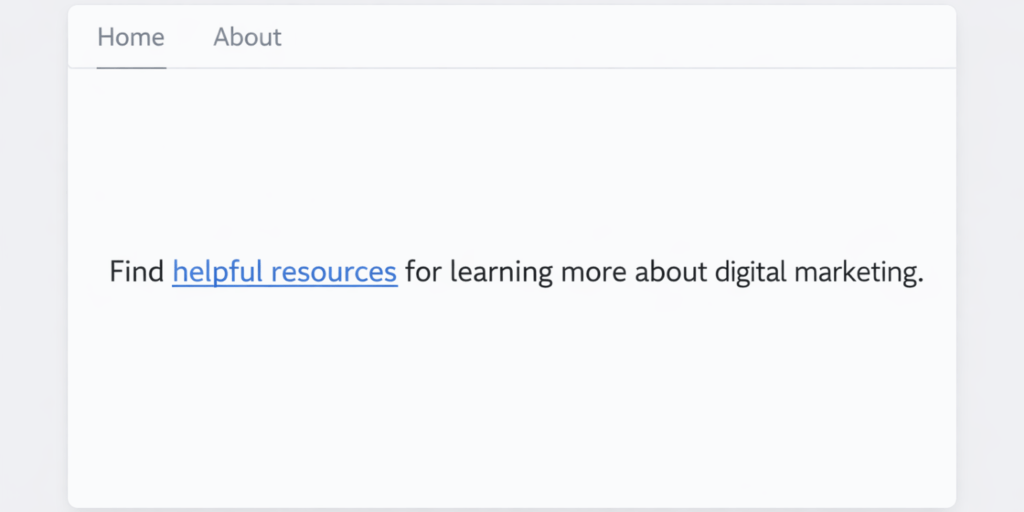
Anchor text is the clickable text in a hyperlink that directs users from one page to another, either within the same website or to an external site.
Understanding Anchor Text in a Simple Way
To understand anchor text better, think about how you normally browse the internet. You don’t click random links—you click on words that make sense to you. If you see a phrase like “learn keyword research,” you already expect that clicking it will take you to a page explaining keyword research.
That expectation is exactly what anchor text is designed to do. It gives context before the click even happens. Search engines use this same logic. When Google sees a specific phrase linked to a page, it uses that phrase to understand what that page is about.
For example, if multiple pages link to a website using the words “SEO strategies,” Google starts associating that page with SEO strategies. Over time, this builds relevance and can help that page rank for those keywords.
A Simple Example
Imagine you are writing a blog and you include a sentence like this:
“Before writing content, you should understand keyword research.”
If the words “keyword research” are clickable and lead to another page, that phrase becomes the anchor text. It clearly tells both the user and the search engine what they will find after clicking.

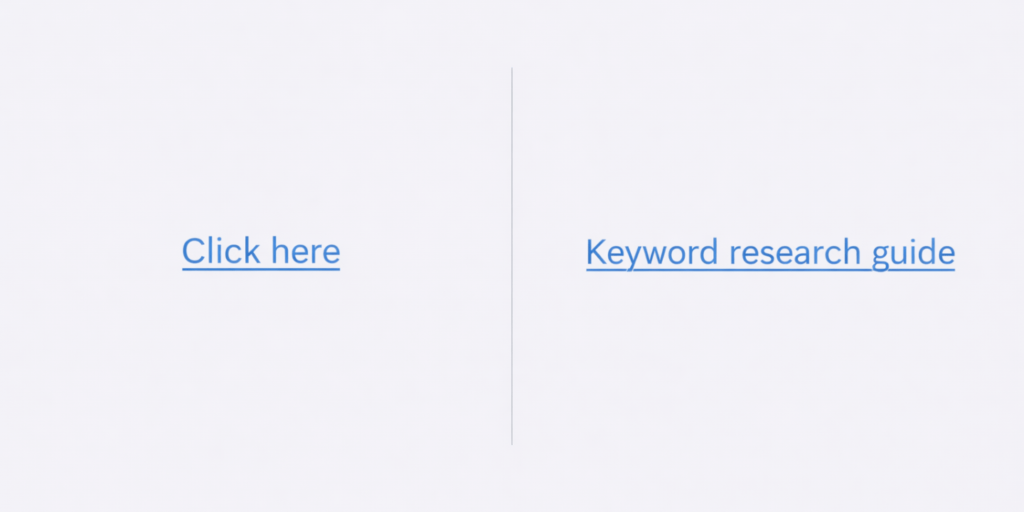
Now compare that with using something like “click here.” It doesn’t give any context, which makes it weaker for both users and SEO.
How Anchor Text Became Important
Anchor text has been a part of SEO since the early days of Google. One of the reasons Google became so powerful compared to older search engines was its ability to understand links, not just content. Anchor text played a big role in that.
In the past, people used this to manipulate rankings by adding exact keywords in every link. For example, if someone wanted to rank for “best SEO tools,” they would use that exact phrase again and again as anchor text across many links.
This worked for a while, but it led to spam. Google eventually updated its algorithms to detect unnatural patterns. Today, anchor text is still powerful, but only when it is used naturally and in the right context.
Why Anchor Text Matters in SEO
Anchor text helps search engines understand relationships between pages. It tells Google what a page is about without even opening it. This makes it easier for search engines to connect topics and rank pages correctly.
For websites, this becomes very important. If your internal links use clear and relevant anchor text, it helps Google crawl your site better and understand your content structure. It also improves the user experience because visitors can easily navigate to related information.
From a business perspective, better anchor text means better targeting. Instead of getting random traffic, you attract people who are actually interested in what your page offers. This increases engagement and can lead to better conversions.
How Anchor Text Works in Real Life
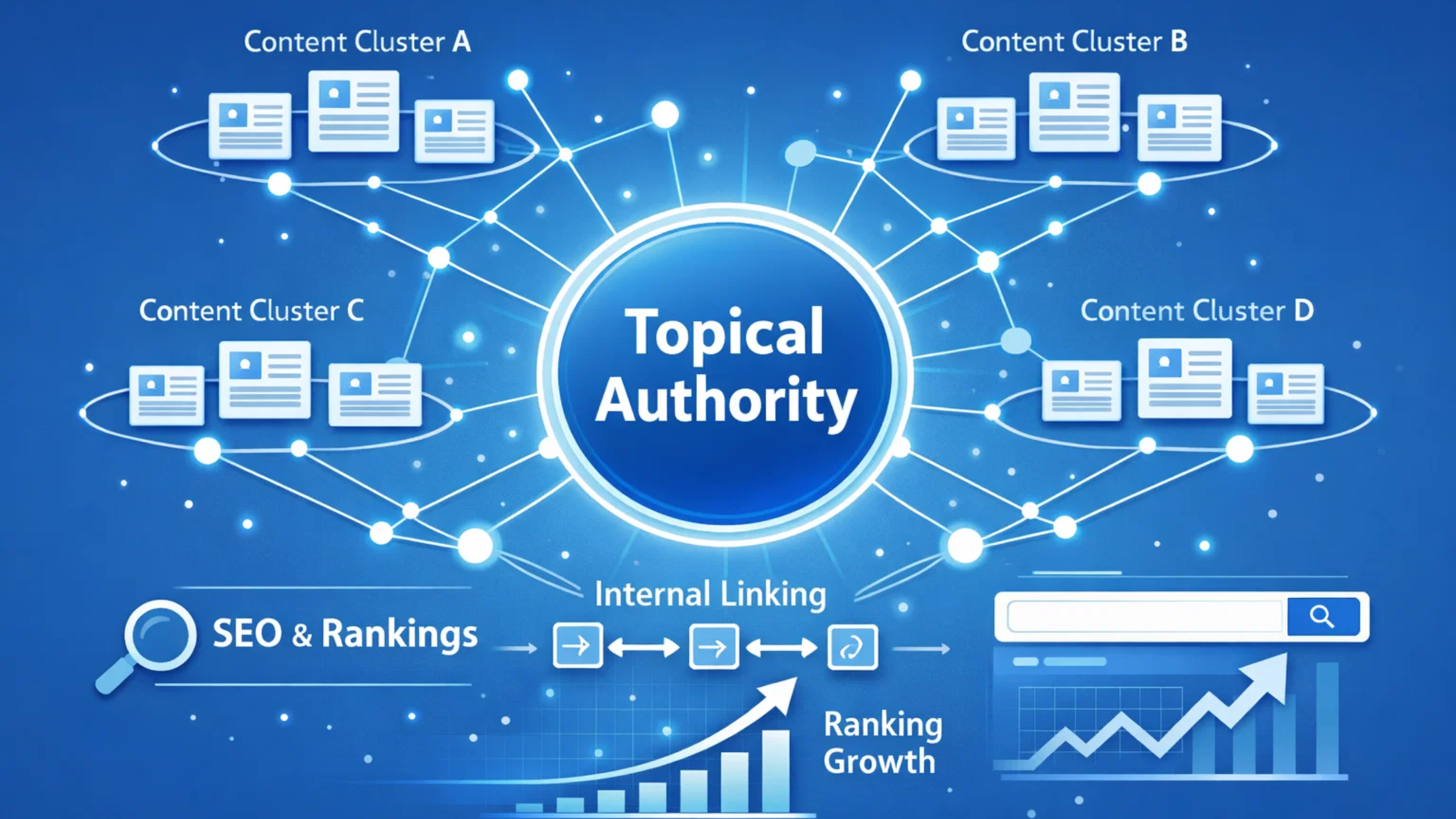
When a page links to another page, search engines look at the anchor text and treat it as a signal. If many pages use similar anchor text to link to a particular page, it strengthens that page’s relevance for that topic.
For example, if several articles link to a page using phrases related to “on-page SEO,” search engines start trusting that the page is actually about on-page SEO. This builds authority over time.
However, this only works when the links are natural. If the same keyword is repeated too aggressively, it can look manipulative and harm rankings instead of improving them.
Using Anchor Text the Right Way
The best way to use anchor text is to keep it natural and meaningful. Instead of forcing keywords, focus on writing in a way that feels normal to a reader. If the text naturally describes the linked page, it’s good anchor text.
For internal linking, think of it as guiding your visitor. If someone is reading about backlinks, you can naturally link to a page about anchor text using a relevant phrase. This creates a smooth journey for the user and also helps search engines understand your content better.
It’s also important to use variation. Not every link should use the exact same words. Mixing different types of anchor text makes your profile look natural and more trustworthy.
Common Mistakes People Make
One common mistake is overusing exact keywords. Many beginners think repeating the same keyword everywhere will boost rankings, but it usually does the opposite. Search engines may see it as spam.
Another mistake is using generic phrases like “click here” too often. While it may work in some cases, it doesn’t provide useful information about the linked page.
Some people also link pages that are not relevant to the content. This confuses both users and search engines and reduces the overall quality of the website.
Practical Tips to Improve Anchor Text
A simple way to improve your anchor text is to always think from the user’s perspective. Ask yourself, “If I click this, does it match what I expect?” If the answer is yes, you’re on the right track.
Try to keep your links helpful rather than promotional. Good anchor text feels like a natural part of the content, not something forced for SEO.
Over time, as you create more content and link it properly, your website becomes easier to navigate and stronger in terms of SEO.
Final Thoughts
Anchor text might seem like a small detail, but it plays a big role in how your website performs in search engines. It connects your content, guides your users, and helps search engines understand your pages better.
If you start paying attention to how you use anchor text, you’ll notice improvements not just in rankings, but also in how people interact with your website.
Anchor Text FAQs
What is anchor text in SEO?
Anchor text is the clickable text in a link that takes users from one page to another. It helps both users and search engines understand what the linked page is about before clicking.
Why is anchor text important for SEO?
Anchor text gives context to search engines about the linked page. It helps improve keyword relevance, strengthens internal linking, and can impact how well a page ranks in search results.
What is the best type of anchor text?
There is no single “best” type. A natural mix works best. This includes exact match, partial match, branded, and generic anchor text. Keeping it varied makes your SEO look more natural and safe.
Is using exact match anchor text good?
Exact match anchor text can be helpful, but only when used naturally. Overusing it can look spammy and may harm your rankings. It’s better to mix it with other types of anchor text.
What is the difference between internal and external anchor text?
Internal anchor text links to pages within your own website, helping with navigation and structure. External anchor text links to other websites and helps build authority and trust.
Can anchor text affect rankings?
Yes, anchor text can influence rankings because it tells search engines what a page is about. However, it works best when combined with quality content and proper SEO practices.
How do I choose the right anchor text?
Choose anchor text that clearly describes the linked page. It should feel natural in the sentence and match what the user expects after clicking.
What are common mistakes in anchor text?
Common mistakes include overusing the same keyword, using generic phrases like “click here” too often, and linking to irrelevant pages. These reduce SEO effectiveness.
How many anchor text links should I use on a page?
There is no fixed number, but links should be added only when they provide value. Focus on quality and relevance instead of adding too many links.
Is anchor text still important in 2026?
Yes, anchor text is still important. Even with AI and advanced algorithms, it remains a strong signal for understanding content and improving website structure.


No Comments