


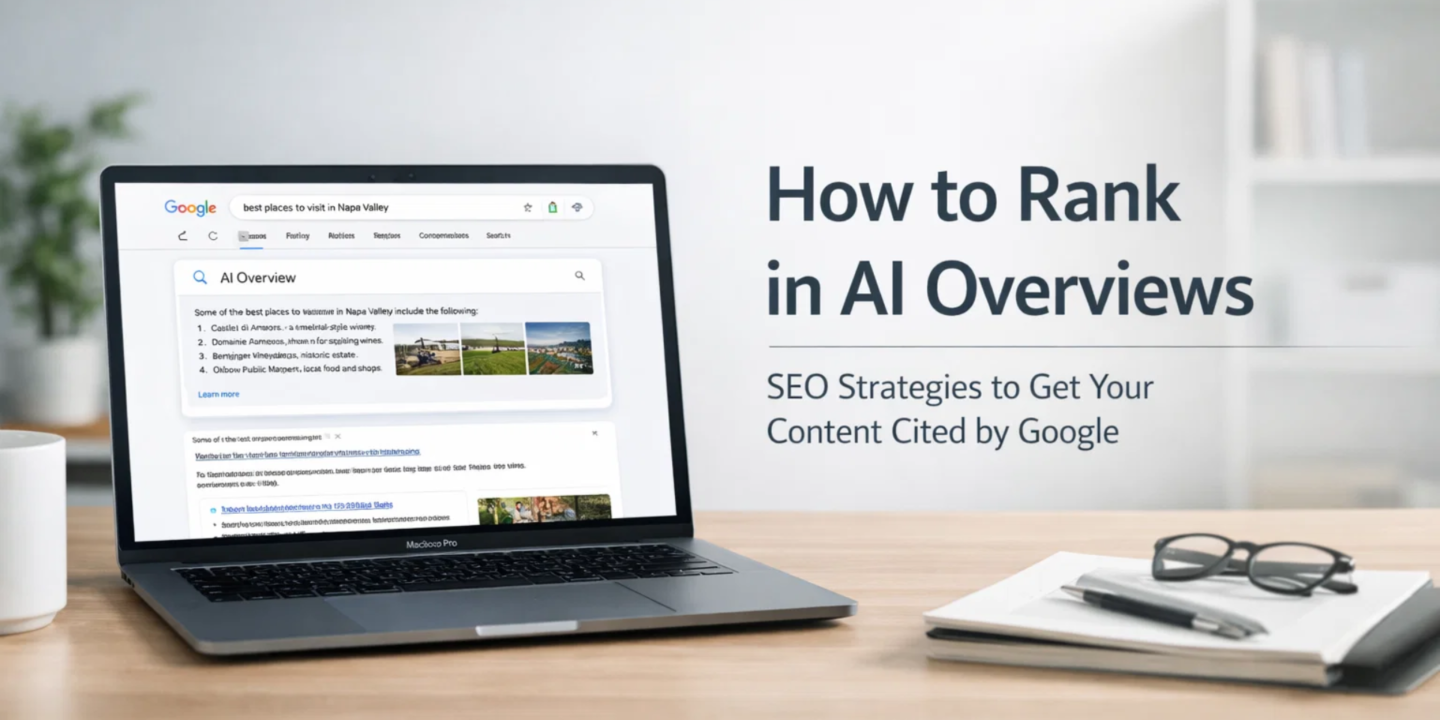
If your content is getting indexed, ranking a little, and still not showing inside AI Overviews, the problem is usually not just “SEO is hard.”
The real issue is that Google’s AI systems are not looking for average content anymore. They are looking for the pages that explain a topic clearly, satisfy the search instantly, and feel trustworthy enough to cite.
That is why some blogs get pulled into AI-generated answers while others stay stuck below, even when they are targeting the same keyword.
A lot of site owners still think ranking in AI Overviews is about adding more keywords, writing longer articles, or publishing more content faster.
It is not.
The blogs that get picked usually do a few things better. They answer the search early. They match user intent properly. They cover the topic deeply without sounding bloated. And they make it easy for both readers and search engines to understand what the page is really about.
This shift is changing how content wins in search.
Before, a blog could rank because it was decently optimized and had enough backlinks. Now, if the page feels generic, slow, repetitive, or unclear, it becomes much easier for Google to skip it when building an AI Overview.
That is the part many brands miss.
You are not just competing for a blue link anymore. You are competing to become the source Google trusts enough to summarize, reference, and surface at the top of the page.
So if you want to rank in AI Overviews, you need more than traditional SEO basics.
You need content that is useful fast, structured cleanly, and backed by real topical authority.
In this guide, you will learn what actually makes a blog more likely to get picked, what mistakes keep content ignored, and how to build pages that have a stronger chance of being cited in AI Overviews.
Quick Answer
To rank in AI Overviews, your blog needs to do more than target a keyword.
It should answer the user’s question quickly, match search intent, cover related subtopics clearly, use strong on-page SEO, and build enough trust that Google sees it as a reliable source worth citing.
That means better structure, better clarity, better authority, and better user experience — not just more words on the page.
What It Really Means to Rank in AI Overviews
A lot of people hear the phrase rank in AI Overviews and think it works exactly like traditional Google rankings.
It doesn’t.
In normal search, ranking usually means your page appears in one of the organic positions on the search results page. You can track those positions, compare movement, and measure performance in a more fixed way.
AI Overviews work differently.
Here, Google generates a summarized answer at the top of the page and may cite a few sources that support that answer. So when your page appears there, you are not just “ranking” in the old-school sense.
You are being selected as a source that helps Google build its AI-generated response.
That is a big difference.
It means success is no longer only about getting to position one or two. It is also about becoming the kind of page Google sees as useful enough to quote, reference, or highlight inside a generated summary.
And that changes the game.
A page can rank well organically and still not get cited in AI Overviews if it does not answer the query clearly enough, lacks trust signals, or fails to cover the topic in a way that is easy for AI systems to extract.
On the flip side, some pages with strong relevance, better structure, and clearer answers can earn visibility inside AI Overviews because they make the information easier to use.
That is why this is not just a traffic conversation.
It is also a visibility, authority, and brand trust conversation.
When your blog gets featured in AI Overviews, users see your brand earlier in the search journey. Even if they do not click right away, your content starts building recognition at the most valuable part of the page.
That matters a lot in today’s search environment, where users often make decisions faster and interact with fewer traditional results.
AI Overviews vs Traditional Rankings
Traditional SEO is still the foundation.
You still need pages that are crawlable, relevant, well-optimized, and strong enough to compete in the normal search results.
But AI Overviews add another layer.
Now the goal is not only to rank. The goal is to become one of the best sources behind the answer.
That means your content should be:
- easy to understand
- directly useful
- structured cleanly
- rich in context
- trustworthy enough to cite
So when people ask, “How do I rank in AI Overviews?” the better answer is this:
You do not just rank.
You earn the chance to be selected.
And the sites that understand this shift early are the ones building stronger content strategies right now.
Why Traditional SEO Still Matters More Than Most People Think
A lot of people are chasing AI search right now like it is a completely separate game.
It is not.
If your traditional SEO is weak, your chances of showing up in AI Overviews usually drop fast.
That is because Google still needs strong pages to pull information from. If your content is not ranking, not indexed properly, or not seen as relevant in the normal search ecosystem, it becomes much harder for Google to trust it as a source for AI-generated summaries.
This is where many sites mess up.
They start optimizing for AI Overviews without fixing the basics first. They talk about generative AI, schema, and citations, but their page still has weak intent match, poor internal linking, slow load speed, or thin content.
That is like trying to build a penthouse on a weak foundation.
Before your blog can get picked in AI Overviews, it usually needs to prove that it deserves visibility in search overall.
That means traditional SEO still does a lot of the heavy lifting.
Your page should target the right keyword, satisfy the user properly, load well on mobile, have clean heading structure, and be supported by internal links and topical relevance. Without that, even a well-written blog can struggle to become a trusted source.
This is why smart SEO today is not about choosing between traditional SEO and AI SEO.
It is about stacking them together.
Traditional SEO helps your content become discoverable, indexable, and competitive.
AI-focused optimization helps your content become extractable, citable, and visible inside Google’s generated answers.
You need both.
The Real Shift
The shift is not that SEO is dead.
The shift is that ranking alone is no longer the full win.
Earlier, if your page ranked on page one, that was the main goal. Now, even when you rank, you still need to compete for attention above the traditional search result.
That is where AI Overviews change the game.
So yes, AI search is evolving fast.
But the websites winning there are usually not skipping SEO basics. They are doing the basics better than everyone else, then layering smarter content structure, stronger trust signals, and clearer answers on top.
What This Means for Your Blog
If you want your blog to have a real chance of showing in AI Overviews, ask these questions first:
- Is this page already targeting the right intent?
- Is it strong enough to rank in traditional search?
- Is the content clear enough to extract quickly?
- Does the page feel trustworthy and complete?
- Is the technical SEO solid enough for Google to crawl and understand it easily?
If the answer is no to any of these, that is where the work starts.
Because the truth is simple.
AI Overviews may look new, but they still reward pages built on strong SEO fundamentals.
And if your fundamentals are weak, no amount of hype-driven optimization will save the page.
How to Find Keywords That Actually Trigger AI Overviews
This is where most people go wrong.
They write a blog around a keyword they think is relevant, but they never check whether that type of query even has a strong chance of triggering an AI Overview in the first place.
So before writing anything, you need to understand one thing:
Not every keyword behaves the same in AI-powered search.
Some queries are much more likely to generate AI Overviews than others. If you target the wrong type, your content may still rank organically, but your chances of getting cited inside an AI-generated answer stay low.
That is why keyword selection matters more now than ever.
Focus on Informational and Question-Based Queries
AI Overviews tend to appear more often for searches where users want explanations, comparisons, steps, or direct answers.
That means queries starting with things like:
- how
- what
- why
- when
- best way to
- difference between
- can you
- is it worth
These searches usually show stronger AI Overview potential because the user is asking for understanding, not just navigation.
For example, a keyword like how to rank in AI Overviews has stronger AI Overview potential than something vague like AI SEO.
Why?
Because the first one has a clear question and a clearer intent. Google can understand exactly what kind of answer the user wants.
That makes it easier for AI systems to generate a summary.
Go Beyond Broad Keywords
A lot of bloggers still chase broad head terms because they sound big.
But broad keywords are often messy.
They can have mixed intent, heavy competition, and weak clarity. That makes them harder to win in both traditional search and AI-generated summaries.
Longer, more specific queries usually work better because they reveal what the user actually wants.
Instead of targeting something broad like:
AI overviews
Go deeper with:
- how to rank in AI Overviews
- how to optimize content for AI Overviews
- why my blog is not showing in AI Overviews
- do AI Overviews reduce organic clicks
- best schema for AI Overviews
These are more focused, more useful, and easier to structure content around.
Look for Search Intent, Not Just Search Volume
Big search volume looks attractive.
But if the intent is unclear, that traffic can be useless.
You do not just want a keyword people search.
You want a keyword where the searcher’s need is obvious.
That helps you create content that answers the query faster, feels more satisfying, and has a better chance of being cited.
This is the real mindset shift.
In old-school SEO, people often chased volume first.
In AI search, clarity of intent can matter even more.
So when choosing keywords, ask:
- What exactly is the user trying to know?
- Do they want a quick answer, a guide, a comparison, or an explanation?
- Can I answer that clearly in the first few lines?
- Can I expand it with related subtopics without losing focus?
If yes, you likely have a strong keyword opportunity.
Use Real Search Behavior to Find Better Topics
The smartest keyword research does not come only from tools.
It also comes from how real people ask questions online.
Check places like:
- Google autosuggest
- People Also Ask
- Reddit threads
- Quora discussions
- YouTube comments
- Search Console query data
- competitor blog headings
These places show you how users naturally phrase problems.
And that matters a lot because AI systems are getting better at understanding conversational intent, not just exact-match keywords.
So if you want your blog to feel aligned with modern search behavior, write around the way people actually ask.
Not just the way SEO tools display it.
The Goal Is Not More Keywords
The goal is better keyword targeting.
You do not need 100 random keyword variations stuffed into one article.
You need one strong primary keyword, a few smart secondary phrases, and a content structure that covers the topic in a complete and readable way.
That is how you make your blog more useful for readers and more understandable for Google at the same time.
And once you get this step right, the next move becomes way easier:
answering the query quickly and clearly enough that your content becomes worth selecting.
Answer the Main Query Fast or You Lose the Reader
This is one of the biggest reasons blogs get ignored.
They take too long to get to the point.
The reader clicks because they want an answer, but instead of getting clarity, they get a long warm-up, generic background, and filler lines that delay the real value.
That kills retention fast.
And it also makes your content harder for Google’s AI systems to understand and extract.
If you want a better chance of showing in AI Overviews, your page should answer the main query early.
Not halfway through the article.
Not after five fluffy paragraphs.
Early.
Put the Direct Answer Near the Top
When someone searches how to rank in AI Overviews, they do not want to read a long history lesson about search engines before getting the answer.
They want the core explanation first.
That means your blog should quickly tell them what matters most:
To rank in AI Overviews, your content needs to match search intent, answer the query clearly, build topical authority, and show enough trust and structure for Google to cite it.
That kind of direct answer helps in two ways.
First, it makes the user feel like they landed on the right page.
Second, it gives search engines and AI systems a clean summary they can understand immediately.
This is exactly where a lot of blogs lose.
They try so hard to sound “comprehensive” that they bury the real answer under too much setup.
Make the Opening Section Easy to Extract
Your early content should be simple, clear, and useful.
That means:
- short paragraphs
- direct wording
- no unnecessary jargon
- no vague motivational lines
- no slow build-up before the answer
The goal is not just to impress the reader.
The goal is to remove friction.
If someone can understand your point in seconds, they are far more likely to keep reading.
And if Google can understand your point in seconds, your page becomes easier to use as a potential source.
Clarity Beats Length
A lot of people still think longer means better.
Not always.
If your article is 2,500 words but takes 800 words to explain the main point, the experience feels heavy.
A shorter, sharper page that answers clearly can often do a better job holding attention.
This does not mean your content should be thin.
It means your content should be efficient.
Say the important thing first.
Then expand with examples, strategy, context, and related subtopics.
That flow works much better for modern search.
Think Like the Reader
Before writing any section, ask:
What is the main thing the person wants right now?
Then give that answer first.
After that, you can build depth.
This is the formula that keeps blogs readable and useful:
- answer first
- explain second
- expand third
- support with examples after that
That structure feels natural.
It also keeps the content moving, which is a huge win for engagement.
What This Looks Like in Practice
Weak version:
“AI Overviews are changing the world of search in many different ways, and as search evolves, content creators need to adapt to these trends for future visibility…”
Better version:
“To rank in AI Overviews, your page needs to answer the query clearly, match user intent, and give Google enough trust signals to cite it.”
The second version is stronger because it respects the user’s time.
And that is what better content usually does.
It respects the click.
Once your page gives the answer quickly, the next step is making sure the rest of the article proves that answer with enough depth, authority, and structure to keep both users and search engines engaged.
Build Topical Authority Instead of Writing One Lonely Blog Post
This is where most content strategies stay weak.
They publish one article, optimize it a little, add the keyword a few times, and hope Google sees them as the best source on the topic.
That rarely works anymore.
If you want a stronger chance of showing in AI Overviews, you need to look bigger than one page.
You need topical authority.
That means your website should not just mention the topic once. It should show clear depth around the topic from different angles, so Google can understand that your site genuinely knows the subject.
This matters because AI-powered search is not only looking for a page with a keyword on it.
It is looking for the source that seems most complete, connected, and trustworthy across the topic.
One Good Blog Is Not a Real Content Strategy
Let’s say you publish a blog targeting how to rank in AI Overviews.
That is a strong start.
But if that is the only page on your site about AI search, then your topical depth is still thin.
Now compare that with a site that also has content on:
- AI Overviews vs featured snippets
- how AI Overviews affect CTR
- best schema markup for AI search
- how to track AI Overview citations
- topical authority for AI SEO
- fan-out queries explained
- AI search optimization mistakes
That second site sends a much stronger signal.
It shows topic coverage, content relationships, and deeper expertise.
And that is exactly the kind of ecosystem that supports stronger visibility.
Topical Authority Helps Google Trust You More
When your site covers a topic well from multiple angles, a few good things happen.
First, your internal linking gets stronger.
Second, users can move deeper into related content instead of bouncing after one page.
Third, Google starts seeing clearer connections between your pages, entities, and expertise.
That makes your site feel less like a random publisher and more like a real authority.
And in AI search, that difference matters a lot.
Because when Google generates an answer, it is not just asking, “Does this page mention the keyword?”
It is also asking, “Does this source seem like it really knows this topic?”
Build a Content Cluster Around the Main Topic
The smartest move is to treat your main blog as a pillar page.
Then support it with related articles that go deeper into subtopics.
For this keyword, a smart cluster could include pages like:
- How AI Overviews Affect Organic Traffic
- Best Schema Types for AI Search Visibility
- What Are Fan-Out Queries in SEO
- AI Overviews vs Featured Snippets: What’s the Difference
- How to Build Topical Authority for AI Search
- How to Track AI Overview Mentions in Search Console
Each supporting page should target one clear subtopic.
Then all of them should link back to the main pillar page, while the pillar also links out to them naturally.
This creates a cleaner content map for both users and search engines.
Depth Wins More Than Random Publishing
A lot of sites publish content in a scattered way.
One post on AI search.
One post on Instagram growth.
One post on email marketing.
One post on branding.
That kind of publishing may create content volume, but it does not always create topic authority.
If your goal is to win in AI Overviews, random content is not enough.
You need structured depth.
That means choosing a topic, building supporting pages around it, and making the site feel like a reliable destination for that subject.
What This Means for Your Blog Strategy
Do not think of this article as just one post.
Think of it as the center of a cluster.
Your main blog should answer the big question clearly.
Then your supporting content should expand the topic in a focused way.
That is how you make one blog stronger without stuffing it with every possible keyword or turning it into a mess.
Because real authority is not built by making one page bloated.
It is built by making the whole topic easier to understand across your site.
And once you have that, the next level is covering the related sub-questions Google may explore behind the scenes when generating AI answers.
Cover Fan-Out Queries So Your Content Feels Complete
This is where AI search gets more interesting.
When someone types a query into Google, the system does not always look at that one phrase only.
It can expand the search into related sub-questions, connected angles, and deeper intent paths before generating the final answer.
These are often called fan-out queries.
And if your content covers those related angles well, your chances of being seen as a useful source go up.
What Fan-Out Queries Really Mean
Let’s keep it simple.
If someone searches how to rank in AI Overviews, Google may not only look for pages that mention that exact phrase.
It may also look for content related to:
- what triggers AI Overviews
- how Google chooses sources
- whether traditional SEO still matters
- what schema helps AI search
- how brand mentions affect visibility
- how to improve topical authority
- why some pages get cited and others do not
Now look at that carefully.
If your blog only answers the main keyword in a shallow way, it may feel incomplete.
But if your blog naturally covers these related subtopics, it becomes much easier for Google to treat it like a more useful source.
That is the real power of fan-out coverage.
Why This Helps You Rank Better
AI-generated answers are built from context, not just keyword repetition.
So when your article covers the core query plus the related questions a search engine may explore behind the scenes, your page feels more aligned with how real users think.
Because real users do not stop at one question.
They ask one thing, then immediately wonder about three more.
Good content mirrors that behavior.
That is why the best-performing pages often feel like they answer the next question before the reader even asks it.
And that is also why those pages feel more complete, more satisfying, and more trustworthy.
How to Find Fan-Out Questions for Your Blog
You do not need to overcomplicate this.
Start by asking:
If someone searches this keyword, what would they ask next?
For this topic, likely follow-up questions include:
- Do AI Overviews reduce clicks?
- Do you need to rank in the top 10 first?
- Does schema markup help?
- What kind of content gets cited?
- Are backlinks still important?
- How do you track AI Overview visibility?
These questions are gold.
They help you expand the blog in a way that adds real value instead of random word count.
You can also find these angles through:
- Google People Also Ask
- related searches
- competitor headings
- Reddit and Quora questions
- Search Console query data
- forum discussions
The goal is to uncover the surrounding intent, not just the main phrase.
Add Fan-Out Queries Into the Structure Naturally
Do not dump all of them into one messy section.
Instead, use them where they make sense.
You can turn them into:
- H2 or H3 headings
- mini-answer sections
- FAQs
- comparison blocks
- supporting internal links
This keeps your article clean while still expanding its topical reach.
That is the balance you want.
Not bloated.
Not thin.
Complete.
The Big Win Here
When your article answers the main query and also handles the related intent around it, the content feels more useful to both readers and search engines.
Readers stay longer because they keep finding the next answer.
Google understands the page better because the topic is covered from multiple meaningful angles.
That is how one article starts feeling like a real resource instead of just another SEO post.
And once your blog has the right keyword, a strong direct answer, topical authority, and fan-out coverage, the next thing that matters is whether your site is technically clean enough for Google to crawl, understand, and trust properly.
Make Sure Your Technical SEO Is Not Silently Killing the Page
A lot of blogs fail before content quality even gets a fair shot.
Not because the writing is bad.
But because the page has technical issues that make it harder for Google to crawl, index, load, or understand properly.
This part is not flashy, but it matters a lot.
If your page is not technically clean, even strong content can struggle to earn visibility in traditional search and AI Overviews.
Crawlability Comes First
Google cannot use what it cannot access.
So before expecting your blog to rank or get cited, make sure the page is actually crawlable and indexable.
That means checking things like:
- the page is not blocked in robots.txt
- there is no accidental noindex tag
- the URL returns a proper 200 status code
- the page is included in your internal linking structure
- Google can render the important content properly
A lot of people skip this and go straight to content optimization.
But if Google cannot fully access the page, the rest of the effort gets weaker fast.
Indexability Is Non-Negotiable
Sometimes a page exists on the site but is not really part of the index in a meaningful way.
Maybe it is orphaned.
Maybe it has thin supporting signals.
Maybe canonical tags are confusing Google.
Maybe the content is too similar to another page.
If your page is not cleanly indexed, it becomes much harder for it to compete.
So every important blog should be checked inside Google Search Console.
Make sure Google is seeing the right URL, indexing the correct version, and not facing technical confusion.
Page Experience Still Matters
Even the best answer can lose if the reading experience feels annoying.
If the page loads slowly, shifts while loading, breaks on mobile, or feels cluttered with too many distractions, users leave faster.
And that sends the wrong signal.
A good blog should feel smooth.
That means:
- fast enough to load without frustration
- mobile-friendly and easy to scroll
- clean design with clear spacing
- readable fonts and strong contrast
- no aggressive popups killing the experience
This matters even more now because if users land on your content from search and instantly bounce, your page loses both trust and attention.
Structure Helps Search Engines Understand the Page
Technical SEO is not only about speed and indexing.
It is also about making the page easier to interpret.
That includes:
- one clear H1
- logical H2 and H3 hierarchy
- descriptive URL slug
- optimized title tag
- strong meta description
- schema where relevant
- internal links to supporting pages
This kind of structure helps Google understand what the page is about and how it connects to the rest of your website.
And when that understanding improves, your content has a better chance of being used in richer search features.
Small Technical Problems Create Big Visibility Loss
This is the annoying truth.
A page does not need one huge issue to underperform.
Sometimes it is a bunch of small problems stacked together:
- slow mobile speed
- weak internal linking
- bad heading structure
- poor image optimization
- low crawl priority
- cluttered design
- confusing canonicals
None of these alone may look dramatic.
But together, they quietly reduce your page’s ability to compete.
That is why strong SEO is often about removing friction.
The fewer obstacles Google and users face, the easier it becomes for the content to do its job.
What This Means for Your Blog
If you want a page to rank in AI Overviews, do not treat technical SEO like an afterthought.
Think of it as the system that supports the content.
Your writing may win attention.
But technical SEO helps the page become accessible, understandable, and usable enough to earn that opportunity in the first place.
Once that foundation is solid, the next layer is making your content even easier for Google to interpret through structured data and stronger context signals.
Use Structured Data to Make Your Content Easier to Understand
Structured data is one of those things people either overhype or ignore completely.
The truth sits in the middle.
Schema markup is not some magic button that forces Google to put your page in AI Overviews.
But it can absolutely help search engines understand your content better, especially when it is used correctly and matches what is visible on the page.
That matters because the easier your page is to interpret, the easier it becomes for Google to connect your content with the right search intent.
What Structured Data Actually Does
Structured data gives search engines extra context about the content on a page.
Instead of only reading the text and trying to guess the format, Google can use schema to understand whether the page is an article, a how-to, an FAQ, an organization page, a product page, or something else.
That added clarity does not replace strong content.
It supports it.
So if your article is already well-written, properly structured, and aligned with intent, structured data can make that value easier to process.
Why It Matters for AI-Driven Search
AI-powered search still depends on understanding content clearly.
If your page has strong headings, direct answers, a clean layout, and helpful schema, it becomes easier for Google to classify what your content is about and how it should be used.
This is especially helpful when your blog includes:
- step-by-step guidance
- question-and-answer sections
- author information
- organization details
- article metadata
All of these can strengthen the signals around the page.
Again, schema alone will not save weak content.
But when paired with strong SEO and useful writing, it becomes part of a much cleaner system.
Best Schema Types for This Kind of Blog
For a blog about ranking in AI Overviews, the most relevant structured data types usually include:
- Article for the main post
- FAQPage if you include a proper FAQ section
- HowTo if the article is structured as a step-by-step process
- Organization to reinforce brand details
- Author information where applicable
The goal is not to use every schema type just because you can.
The goal is to use the ones that genuinely match the visible content on the page.
That part is important.
Never Fake the Markup
A lot of people mess this up by adding schema that does not really reflect what is on the page.
That creates a mismatch.
And mismatches are bad news.
If your FAQ schema includes questions that are not visible in the content, or your HowTo markup does not match the actual page structure, the markup becomes less trustworthy.
So the rule is simple:
Only mark up what the user can actually see.
Your schema should support the page, not try to manipulate it.
Structured Data Works Best When the Page Is Already Strong
This is the smartest way to think about it.
Schema is not the strategy.
It is a booster.
If the page is already clear, useful, and technically sound, schema helps strengthen the machine-readable context.
If the page is weak, schema just decorates the weakness.
So before worrying too much about markup, make sure the article itself is:
- answering the query early
- structured clearly
- easy to read
- internally connected
- aligned with search intent
Then add structured data to make that strong page easier for search systems to process.
What This Means for Your Blog
For content aimed at AI Overview visibility, structured data is worth doing because it improves clarity, supports search understanding, and strengthens overall SEO quality.
It should be part of your workflow, not the whole plan.
Think of it like this:
Good content tells Google what the page is about.
Structured data confirms it in a cleaner way.
And when both work together, your page becomes easier to trust, easier to interpret, and more ready to compete for modern search visibility.
The next level after this is building off-page trust, because even strong content and clean schema can struggle if your brand has weak authority outside your own website.
Build Brand Trust Outside Your Website So Google Sees You as a Real Source
This is the part many people ignore.
They focus only on on-page SEO, content structure, and technical fixes, but they forget something important:
Google does not judge your content only by what is on your site.
It also looks at how your brand shows up across the web.
That matters even more now because AI-driven search is built around trust, relevance, and source confidence.
If your blog is well-written but your brand has no real mentions, no reputation, and no signals outside your own domain, it becomes harder to feel like a source worth citing.
Why Off-Page Trust Matters More Now
Think about it like this.
If two pages answer the same question well, Google still needs signals to help decide which one feels more credible.
That is where off-page trust starts doing serious work.
This includes things like:
- backlinks from relevant websites
- brand mentions on trusted publications
- expert quotes or contributor mentions
- reviews and reputation signals
- YouTube mentions
- Reddit or forum discussions about your brand
- citations from niche communities
These signals help build a broader picture.
They show that your brand exists beyond its own blog and has some level of recognition, validation, or authority in the space.
That kind of trust can support both rankings and AI Overview visibility.
Backlinks Still Matter, But Context Matters More
Yes, backlinks are still important.
But now the quality and relevance of those mentions matter even more.
A random link from a weak site is not the flex people think it is.
A real mention on a respected niche blog, a comparison article, a tools roundup, an industry newsletter, or a creator’s video can be much more valuable because it adds both visibility and trust.
This is the shift.
It is not just about building links.
It is about building recognition.
That means your brand should appear where people already go to learn, compare, and validate decisions.
Brand Mentions Help AI Understand Who You Are
AI systems do not only read your article.
They also learn from patterns across the web.
So if your brand is mentioned in useful contexts again and again, that strengthens your entity presence.
It helps search engines connect your name with certain topics, services, and expertise.
That is a big deal.
Because when your brand becomes associated with a topic consistently, your content has a stronger chance of being treated as a trusted source within that subject area.
This is why surround-sound visibility matters.
You do not want your brand living in one corner of the internet.
You want it appearing across relevant places where authority is built.
Smart Ways to Build Off-Page Trust
You do not need spammy outreach or fake PR.
You need useful placements.
Some of the best ways to strengthen trust include:
- publishing original research people can cite
- contributing expert insights to industry blogs
- getting featured in tool roundups or “best of” lists
- appearing on podcasts or YouTube channels in your niche
- building branded content people discuss naturally
- getting mentioned in newsletters, communities, and forums
- earning backlinks from relevant educational content
The key is this:
Be worth mentioning.
That always works better than begging for random links.
What This Means for Your Blog Strategy
If your goal is to rank in AI Overviews, your content should not live alone.
It should be supported by a brand that looks credible online.
That does not mean you need massive authority overnight.
But it does mean you should work on building signals that say:
- this brand is active
- this brand is trusted
- this brand is relevant in this topic
- this brand gets mentioned by other people, not just itself
That kind of off-page trust makes your content stronger.
And when combined with good structure, strong SEO, topical depth, and schema, it creates the kind of ecosystem Google is far more likely to trust.
Once you have that, the next thing is making the content itself even easier to consume, because trust gets you considered, but readability and structure help keep the user on the page.
Make Your Blog Easy to Scan, Easy to Trust, and Easy to Stay On
You can have a strong keyword, good SEO, and solid authority, but if the blog feels heavy to read, people still leave.
That is the part many writers underestimate.
A blog does not only need good information.
It needs a good reading experience.
If the page looks cluttered, the paragraphs are too long, the wording feels robotic, or the structure makes users work too hard, attention drops fast.
And once attention drops, engagement usually goes with it.
Readability Is Not Just About Simple Words
A lot of people think readability only means writing in easy English.
That is only one part of it.
Real readability is about how smooth the whole experience feels.
That includes:
- how fast the reader finds the answer
- how clean the blog looks on the page
- how easy the sections are to scan
- how naturally one idea flows into the next
- how much effort it takes to understand the content
If reading your blog feels like work, people bounce.
If it feels smooth, people keep going.
Use Short Paragraphs and Clear Spacing
This is one of the easiest wins.
Big text blocks scare readers away.
Even when the content is good, a wall of text feels tiring before the person even starts reading.
That is why short paragraphs matter so much.
Keep each paragraph focused on one clear idea.
And give the content breathing room.
Spacing makes the blog feel more premium, more readable, and much easier to stay with.
That is also why adding one blank line after every two to three lines works so well.
It reduces visual pressure and keeps the blog feeling open instead of cramped.
Headings Should Pull the Reader Down the Page
Your headings should not just label sections.
They should create momentum.
A weak heading only organizes.
A strong heading makes the reader want to know what comes next.
For example, instead of writing something flat like Content Structure Tips, write something more specific and useful like Why Readers Leave When Your Blog Takes Too Long to Get to the Point.
That kind of heading is clearer, more emotional, and more curiosity-driven.
It keeps people moving.
Use Examples to Reduce Mental Effort
Examples make content easier to understand.
They turn abstract advice into something real.
So instead of only saying answer the query early, show what that actually looks like.
Instead of only saying build topical authority, show what kind of supporting articles someone should publish.
This matters because users understand faster when they can see the idea in action.
And when understanding becomes easier, reading becomes lighter.
Keep the Language Human
No one wants to read a blog that sounds like it was written by a corporate robot.
If the wording feels stiff, generic, or overly polished in a fake way, readers disconnect fast.
The strongest blogs sound like a smart human explaining something clearly.
That means:
- simple but confident language
- clear explanations
- no unnecessary jargon
- no fake complexity
- no fluff added just to increase word count
You do not need to sound fancy.
You need to sound useful.
Break the Pattern Before the Blog Feels Repetitive
Even good content gets boring if every section looks and feels the same.
So mix the experience a little.
Use things like:
- mini summaries
- bullet points where useful
- tables for comparisons
- checklist sections
- FAQ blocks
- examples and mini case-style moments
This resets attention.
It keeps the blog from feeling flat.
And it gives the reader small rewards as they keep scrolling.
The Real Goal Is to Lower Friction
That is the whole game.
A blog people stay on is usually not the one with the most words.
It is the one that feels easiest to consume.
So every choice should reduce friction.
Ask yourself:
- Is this section easy to scan?
- Is the answer clear enough?
- Is the paragraph too long?
- Does the heading make me want to continue?
- Did I explain the point, or did I just talk around it?
The easier the reading experience, the better your retention usually becomes.
And when users stay longer, engage more, and move through the article naturally, your page becomes stronger in every way that matters.
Common Mistakes That Stop Blogs From Showing in AI Overviews
A lot of blogs do not fail because the topic is bad.
They fail because the execution sends weak signals.
The page may look fine on the surface, but when you break it down, it has too many small issues that make it harder for Google to trust, understand, or use as a source.
This is why many sites publish decent content and still never get picked.
Mistake 1: Writing Around the Answer Instead of Giving It
Some blogs spend too much time warming up.
They add long intros, broad industry talk, and generic filler before they answer the main query.
That frustrates readers.
It also makes the page less useful for AI systems that want a clear, extractable answer fast.
If your content keeps delaying the point, it weakens the page immediately.
Mistake 2: Targeting Broad Keywords With Messy Intent
A broad keyword may look attractive because of search volume, but if the intent is mixed, your article becomes harder to shape.
That usually leads to content that feels vague.
And vague content rarely becomes the best source for anything.
Focused, question-based, intent-clear topics are usually much stronger because they allow you to answer one need properly and build depth around it.
Mistake 3: Publishing One Blog and Expecting Authority
A single blog post is not topical authority.
If your whole site has one article on AI Overviews and nothing else that supports it, Google has less reason to see you as a serious source on the topic.
Strong pages are often supported by related content, internal links, and a clear subject ecosystem.
Without that, the page can feel isolated.
Mistake 4: Creating Generic AI-Style Content
This one is getting more obvious every day.
A lot of blogs sound polished, but empty.
They repeat common advice, avoid taking a strong angle, and say the same thing everyone else is saying.
That kind of content rarely feels worth citing.
If your blog reads like a remix of ten other blog posts, it loses originality, trust, and value.
To stand out, your content needs real clarity, sharper positioning, better examples, and a point of view that adds something useful.
Mistake 5: Ignoring Technical SEO
You can write a strong article and still underperform if the page has technical friction.
Maybe it is slow on mobile.
Maybe it is not linked properly.
Maybe there are crawl or index issues.
Maybe the heading structure is weak.
When these problems stack up, the content becomes harder to discover and harder to trust in search.
Mistake 6: Adding Too Much Fluff to Look Comprehensive
This is one of the sneakiest mistakes.
Writers often think that more sections, more words, and more background make a page stronger.
Sometimes it does the opposite.
Too much unnecessary content can dilute the main topic, bury the answer, and make the reading experience feel heavy.
Depth is good.
Bloat is not.
Your blog should feel complete, not overstuffed.
Mistake 7: Weak Readability and Poor Formatting
If the blog looks hard to read, many users will leave before they even discover the value.
Long paragraphs, flat headings, crowded design, and robotic wording all hurt engagement.
And when engagement drops, your content becomes less competitive.
Good formatting is not decoration.
It is part of the strategy.
Mistake 8: No Trust Signals Beyond the Site
If your brand has no real mentions, no external validation, and no visible authority in the niche, your content has less support.
Even a good article can feel weaker when the brand behind it has little off-page trust.
That is why backlinks, mentions, and reputation matter more than many site owners realize.
The Real Lesson
Most underperforming blogs are not missing one magical trick.
They are losing because of a stack of preventable mistakes.
A weak intro.
A messy keyword.
Thin topical support.
Generic writing.
Technical friction.
Poor readability.
Low trust.
Fix those, and the page becomes much stronger.
Because at the end of the day, blogs that show in AI Overviews usually do not win by accident.
They win because they make it easier for Google to say yes.
Simple Checklist to Improve Your Chances of Ranking in AI Overviews
By this point, the strategy is clear.
You do not need gimmicks.
You need a page that answers the query better, feels easier to trust, and is supported by stronger SEO signals than the average blog in your space.
So before you publish, use this checklist to make sure the article is actually ready.
AI Overviews Optimization Checklist
| Area | What to Check | Why It Matters |
|---|---|---|
| Keyword Targeting | Is the primary keyword clear and intent-driven? | AI Overviews respond better to focused, question-based searches |
| Direct Answer | Did you answer the main query near the top? | Helps both readers and search engines understand the page quickly |
| Search Intent | Does the content match what the user really wants? | Strong intent match increases satisfaction and relevance |
| Structure | Are H2s and H3s clear, useful, and easy to scan? | Better structure makes the content easier to extract and follow |
| Readability | Are paragraphs short with clean spacing? | Improves retention and reduces bounce risk |
| Topical Depth | Did you cover key related subtopics naturally? | Helps the article feel more complete and authoritative |
| Fan-Out Coverage | Does the content answer likely follow-up questions? | Makes the page more aligned with AI-driven search behavior |
| Internal Linking | Does the article connect to supporting pages? | Strengthens topical authority and site understanding |
| Technical SEO | Is the page crawlable, indexable, and mobile-friendly? | Without this, even good content can struggle |
| Structured Data | Did you add the right schema for the page? | Helps search engines interpret content more clearly |
| Trust Signals | Does the content include useful examples, insight, or proof? | Stronger trust makes the page more citable |
| Brand Authority | Does your site have off-page mentions or backlinks? | Supports credibility beyond the page itself |
This kind of checklist matters because it forces you to think beyond just writing.
A blog can sound good and still miss the details that make it competitive.
That is why smart publishing is not just about creating content.
It is about checking whether the page is actually strong enough to deserve visibility.
Quick Self-Test Before You Publish
Before hitting publish, ask yourself these questions:
- Would someone get the answer fast from this page?
- Does the blog feel easier to read than competing articles?
- Did I explain the topic clearly, or just make it longer?
- Does the page feel like it was written by someone who knows the topic?
- Is the article supported by structure, internal links, and trust signals?
If the answer is yes across the board, your blog is in a much stronger position.
And once the page is live, the final step is not to leave it alone.
You need to monitor how it performs, what queries it starts showing for, and where it can be improved over time.
Final Thoughts: The Blogs That Win in AI Overviews Feel Useful Fast
If there is one thing to take away from all of this, it is this:
Ranking in AI Overviews is not about chasing a shortcut.
It is about making your blog the clearest, most useful, and most trustworthy answer on the page.
That is why some blogs get picked while others get ignored.
The winning pages do not just target a keyword.
They understand the real question behind the search, answer it early, structure the content clearly, cover the topic deeply, and support the page with strong SEO foundations.
They feel easier to use.
They feel easier to trust.
And that makes them easier for Google to cite.
This is also why traditional SEO still matters so much.
You still need the basics.
Your page should be crawlable, relevant, internally connected, mobile-friendly, and strong enough to compete in normal search results.
Then on top of that, you build for modern search by improving readability, covering fan-out queries, adding structured data, and strengthening brand trust across the web.
That is the real play.
Not more words.
Not more hype.
Just better content systems.
The good news is that this is still very winnable.
Most blogs are either too generic, too slow to answer, too weak in structure, or too disconnected from the rest of the topic.
So if you create content that is sharper, cleaner, and more useful, you already put yourself ahead of a lot of competitors.
The Bottom Line
If you want your blog to rank in AI Overviews, focus on this:
- target the right query
- answer it fast
- build topical authority
- cover related sub-questions
- fix technical friction
- make the content easy to read
- strengthen trust on and off the page
Do that consistently, and your content becomes far more likely to earn visibility where it matters most.
FAQs About Ranking in AI Overviews
How do you rank in AI Overviews?
To rank in AI Overviews, your content needs to answer the query clearly, match search intent, and show strong trust signals.
That includes solid traditional SEO, helpful structure, topical authority, internal linking, and content that is easy for Google to understand and cite.
It is not about one trick.
It is about building a page that feels like one of the best sources on the topic.
Do you need to rank in the top 10 to appear in AI Overviews?
In many cases, pages that appear in AI Overviews already perform well in traditional organic search.
That is why top 10 visibility still matters a lot.
Google often pulls from pages it already sees as relevant and trustworthy, so improving your normal rankings usually improves your chances of getting cited too.
What type of keywords trigger AI Overviews most often?
AI Overviews are more likely to appear for informational, question-based, and longer-tail searches.
Keywords starting with how, what, why, or best way to usually have stronger potential because the user is clearly looking for an explanation or solution.
That kind of search intent is easier for Google to summarize.
Does schema markup help with AI Overviews?
Schema markup can help by making your content easier for search engines to understand.
It is not a guaranteed ranking factor for AI Overviews on its own, but it supports your overall SEO and improves machine-readable clarity.
The key is to use schema that matches the actual content on the page.
Do AI Overviews reduce organic clicks?
They can.
Because Google gives users quick answers directly in the search results, some users may not click through the same way they used to.
But that does not mean AI Overviews are bad for visibility.
If your brand gets cited, you still gain exposure, trust, and a stronger chance of being seen early in the user journey.
What are fan-out queries in AI search?
Fan-out queries are related sub-questions Google may explore behind the scenes when generating an AI answer.
For one main search, Google can look at connected angles and follow-up intent before building the final summary.
That is why covering related subtopics in your content makes it feel more complete and increases your chances of being selected.
How can I track whether my blog shows in AI Overviews?
You can monitor this through SEO tools that track AI Overview visibility, and you can also watch query behavior in Google Search Console.
Look for shifts in impressions, clicks, and keywords where your page is gaining more visibility, especially on informational searches that are likely to trigger AI-generated summaries.
Are AI Overviews more important than traditional SEO?
No. They are important, but they are not separate from traditional SEO.
Traditional SEO is still the base.
Without strong rankings, crawlability, relevance, and authority, it becomes much harder to show in AI Overviews.
The smartest approach is to improve both together, not choose one over the other.


Recent Post

No Comments