If you’ve ever searched what are backlinks or heard people say “backlinks are the backbone of SEO” and felt confused, you’re not alone.
Backlinks are one of the most talked-about topics in SEO, yet they’re also one of the most misunderstood. For beginners, business owners, and even marketers, understanding backlinks in SEO is often the missing piece between a website that ranks and one that doesn’t.
In simple terms, backlinks act like trust signals for search engines. When another website links to your page, it tells Google that your content is worth referencing.
That’s why searches around backlink meaning, what are backlinks in SEO, and even backlinks kya hai keep growing—people want a clear explanation without technical jargon.
In this guide, we’ll break down what backlinks are, explain their meaning in SEO, how backlinks work, and why they still matter for rankings today. No fluff, no outdated tactics—just practical clarity you can actually use.
Quick Answer: What Are Backlinks in SEO?
Backlinks are links from one website to another. In SEO, backlinks act as trust signals for search engines like Google. When a website links to your page, it tells Google that your content is valuable and reliable, which can help improve rankings. This is why backlinks in SEO are one of the most important ranking factors.
What Are Backlinks in SEO? (Simple Explanation)
To understand what are backlinks in SEO, think of backlinks as recommendations on the internet. When one website adds a link pointing to another website, that link is called a backlink.
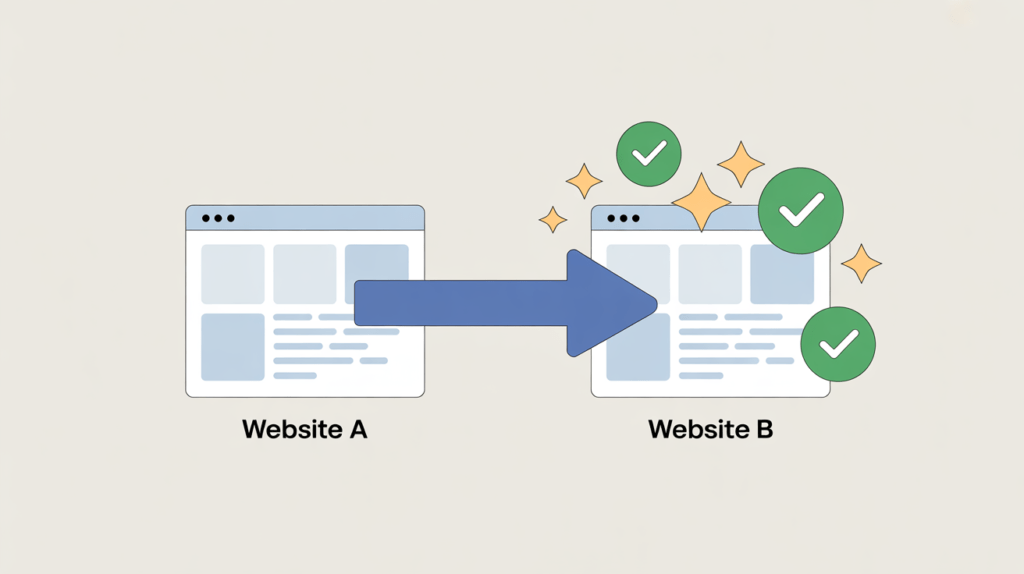
In SEO terms, a backlink is created when:
- Website A links to a page on Website B
- Website B receives a backlink
This is why backlinks are also called inbound links or incoming links.
From Google’s perspective, backlinks help answer one important question:
👉 Can this website be trusted?
If reputable websites link to your content, search engines see it as a signal that your page is useful, relevant, and worth ranking. That’s exactly why backlinks in SEO play such a big role in determining search visibility.
To simplify the backlink meaning even more:
- More quality backlinks = more trust
- More trust = better chances to rank
This is also why beginners often search backlinks kya hai—they want a clear, no-confusion explanation of how links affect rankings.
In short, backlinks are not just links. They are votes of confidence that help search engines understand the value of your website.
What Is Backlink Meaning in SEO?
The backlink meaning in SEO is simple:
a backlink is a link that points to your website from another website.
When people search for backlink meaning or backlinks kya hai, they’re usually trying to understand whether a backlink is different from a normal link. The answer is about perspective.
- If you add a link from your site to another site → it’s an outgoing link
- If another site links to your page → that link is a backlink for you
So, the backlink meaning in SEO depends on who is receiving the link.
Search engines like Google treat backlinks as signals of trust and authority. If multiple relevant websites link to your content, Google assumes:
- Your content is useful
- Your page is credible
- Your website deserves visibility
That’s why backlinks in SEO are often compared to recommendations. Just like a recommendation from a trusted person matters more, a backlink from a trusted website carries more value.
To sum it up in one line:
👉 Backlinks are links that help search engines judge the trust and importance of your website.
How Do Backlinks Work in SEO?
To really understand backlinks in SEO, you need to know how search engines use them. Backlinks don’t magically boost rankings overnight. Instead, they help search engines evaluate trust, relevance, and authority.
Here’s how backlinks work step by step.
1️⃣ Search Engines Discover Backlinks
Search engines like Google constantly crawl websites. When they find a link from one page pointing to another, they register it as a backlink. This is how Google discovers new pages and understands how websites are connected.
This discovery process is a key part of how backlinks work in SEO.
2️⃣ Backlinks Pass Trust and Authority
Not all backlinks are equal. When a trusted, high-quality website links to your page, some of its authority is passed along. This helps search engines see your website as more reliable.
This is why quality matters more than quantity in backlinks in SEO.
3️⃣ Relevance Plays a Big Role
Backlinks work best when they come from websites related to your niche. For example, a marketing blog linking to an SEO article makes more sense than an unrelated site doing the same.
Search engines value relevance because it improves result quality.
4️⃣ Backlinks Influence Rankings
When multiple relevant and authoritative websites link to your content, search engines are more likely to rank your page higher. This doesn’t guarantee top rankings, but it strongly supports your SEO efforts.
That’s why backlinks remain a core ranking factor.
5️⃣ Time and Consistency Matter
Backlinks take time to show results. Google evaluates links over time to ensure they are natural and trustworthy. Consistent, quality backlinks work far better than sudden spikes from low-quality sources.
In short, backlinks work by building trust, authority, and relevance for your website in the eyes of search engines.
Why Are Backlinks Important for SEO Rankings?
Backlinks are important because they help search engines decide which pages deserve to rank higher. When people ask why backlinks are important in SEO, the answer comes down to trust, authority, and visibility.
Here’s why backlinks matter so much.
1️⃣ Backlinks Build Website Authority
Search engines treat backlinks as signals of credibility. When your website earns backlinks from other trusted websites, Google sees your site as more authoritative. More authority increases your chances of ranking for competitive keywords.
This is a core reason backlinks in SEO still matter today.
2️⃣ Backlinks Help Pages Rank Higher
Pages with strong, relevant backlinks usually rank higher than pages without them. Backlinks don’t work alone, but they strongly support on-page SEO and content quality.
That’s why understanding what are backlinks is essential for anyone serious about SEO.
3️⃣ Backlinks Drive Referral Traffic
Beyond rankings, backlinks can send real users to your website. If a popular site links to your page, visitors may click through, bringing targeted traffic that actually converts.
This is an often-overlooked benefit of backlinks.
4️⃣ Backlinks Improve Trust Signals
Websites that earn natural backlinks are seen as more trustworthy by search engines. This trust helps new pages get indexed faster and rank more consistently.
This ties directly into backlink meaning in SEO.
5️⃣ Backlinks Support Long-Term SEO Growth
Unlike ads, backlinks continue to add value over time. A strong backlink profile helps your site stay competitive even as algorithms change.
In simple terms:
👉 Backlinks help search engines trust your website, rank your pages, and send traffic your way.
Types of Backlinks in SEO
Not all backlinks work the same way. To really understand backlinks in SEO, you need to know the different types of backlinks and how each one affects rankings.
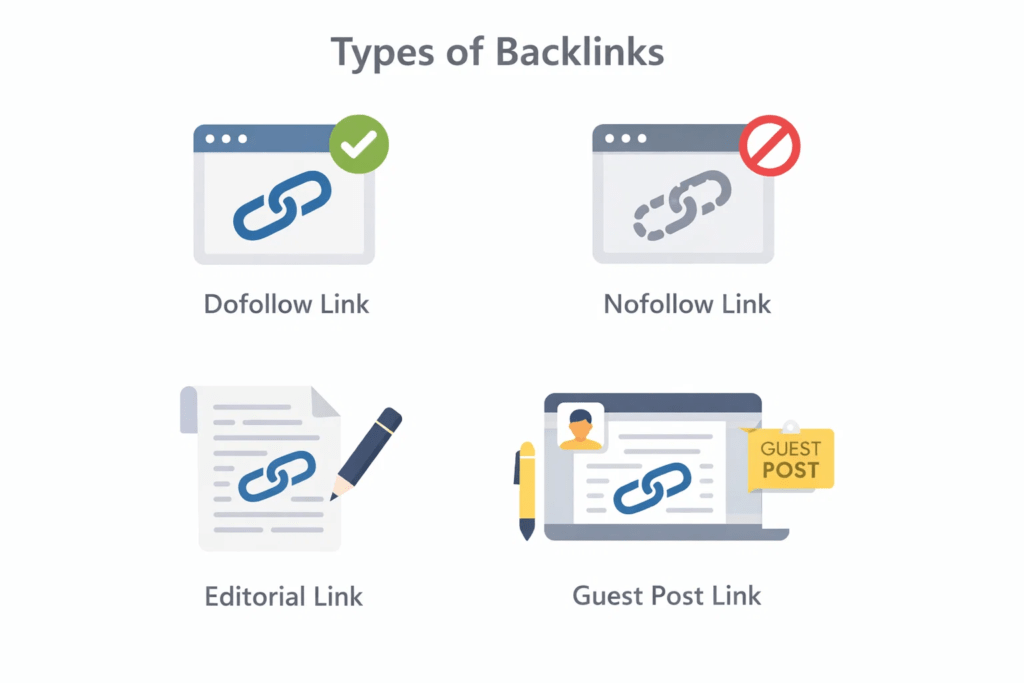
Here are the most common types of backlinks explained in simple terms.
1️⃣ DoFollow Backlinks
DoFollow backlinks are the most valuable type of backlinks in SEO. These links pass authority (also called link equity) from one website to another. When a trusted website gives you a dofollow backlink, it directly helps improve your rankings.
This is why most SEO strategies focus on earning high-quality dofollow backlinks.
2️⃣ NoFollow Backlinks
NoFollow backlinks include a tag that tells search engines not to pass authority. While they don’t directly boost rankings, they still matter for:
- Natural link profile
- Referral traffic
- Brand visibility
In modern SEO, nofollow backlinks still support overall trust.
3️⃣ Editorial Backlinks
Editorial backlinks are links you earn naturally when other websites reference your content because it’s useful or authoritative. These are considered the best backlinks in SEO because they are organic and trusted.
Google values editorial backlinks the most.
4️⃣ Guest Post Backlinks
Guest post backlinks come from articles you write for other websites in your niche. When done ethically and on relevant sites, guest posting is a safe way to build backlinks and authority.
Quality matters more than quantity here.
5️⃣ Profile Backlinks
Profile backlinks are created by adding your website link to profiles on forums, directories, or social platforms. These backlinks are usually nofollow and low-impact, but they help with brand signals and diversity.
6️⃣ Contextual Backlinks
Contextual backlinks are placed naturally within the content of a page, not in footers or sidebars. These backlinks carry more SEO value because they are surrounded by relevant text.
In short:
👉 The best backlinks are relevant, natural, and earned—not forced.
Good Backlinks vs Bad Backlinks
Understanding good backlinks vs bad backlinks is critical if you don’t want your SEO efforts to backfire. Not every backlink helps rankings—some can actually hurt your website.
Here’s how to tell the difference.
✅ What Are Good Backlinks?
Good backlinks are links that add trust and relevance to your website. These backlinks usually come from:
- Relevant websites in your niche
- High-quality, trusted domains
- Pages with real content and traffic
- Contextual placements within articles
Good backlinks support your SEO by sending strong trust signals to search engines. This is exactly why backlinks in SEO focus on quality over quantity.
❌ What Are Bad Backlinks?
Bad backlinks come from low-quality or spammy sources. These include:
- Spam websites
- Irrelevant niches
- Link farms
- Automatically generated sites
Bad backlinks don’t add value and can harm your rankings if they look unnatural or manipulative.
⚠️ Why Bad Backlinks Are Dangerous
Search engines are good at detecting unnatural link patterns. Too many bad backlinks can lead to:
- Ranking drops
- Loss of trust
- Manual or algorithmic penalties
This is why blindly building links without understanding backlink meaning can be risky.
🎯 The Simple Rule to Remember
- One good backlink > 100 bad backlinks
- Relevance + trust > raw numbers
If a backlink looks forced, irrelevant, or spammy, it’s probably doing more harm than good.
How Many Backlinks Do You Need to Rank?
This is one of the most common questions in SEO after people understand what are backlinks. And here’s the honest truth upfront:
👉 There is no fixed number of backlinks that guarantees rankings.
Anyone giving you an exact number is selling fantasies, not SEO.
Why There’s No Fixed Number
The number of backlinks you need depends on competition, not a universal rule. Google compares your page with others already ranking for the same keyword.
To rank, your page needs:
- Similar or better backlink quality
- Similar or better relevance
- Similar or better overall authority
That’s how backlinks in SEO actually work.
What Matters More Than Quantity
Instead of counting backlinks, focus on:
- Relevance of linking websites
- Authority of the source
- Context of the link (inside content > footer/sidebar)
- Natural growth over time
Five strong, relevant backlinks can outperform fifty weak ones. This directly ties back to understanding backlink meaning correctly.
Beginner vs Competitive Keywords
- Low-competition keywords
- May rank with very few backlinks
- Sometimes even zero, if content is strong
- High-competition keywords
- Require consistent, high-quality backlinks
- Often need authority from multiple trusted sources
This is why SEO is strategy, not shortcuts.
The Smart Way to Think About Backlinks
Instead of asking “How many backlinks do I need?”, ask:
👉 “Are my backlinks better than the ones ranking above me?”
That mindset alone puts you ahead of most beginners.How to Get Backlinks for Your Website (Beginner-Friendly)
Once you understand what are backlinks and why backlinks in SEO matter, the next question is obvious: how do you actually get backlinks without messing up your site?
Here are safe, beginner-friendly, Google-approved ways to get backlinks.
1️⃣ Create Content Worth Linking To
The easiest way to earn backlinks is to publish content that people want to reference. This includes:
- In-depth guides
- Clear explanations of complex topics
- Step-by-step tutorials
- Updated, accurate information
When your content solves a real problem, backlinks come naturally over time. This is the foundation of sustainable SEO.
2️⃣ Guest Posting on Relevant Websites
Guest posting means writing articles for other websites in your niche and linking back to your site naturally. When done right, it’s still one of the most effective ways to build backlinks.
Rules to follow:
- Choose relevant websites
- Avoid spammy blogs
- Focus on value, not just links
This method helps both authority and visibility.
3️⃣ Use Internal Mentions and Brand Outreach
If your brand, product, or content is mentioned online without a link, you can politely request the website owner to add one. These are called unlinked brand mentions and they’re easier to convert into backlinks.
This works especially well for blogs, tools, and businesses.
4️⃣ Get Listed on Relevant Directories (Carefully)
Directory backlinks still have value when:
- The directory is relevant
- It’s trusted
- It’s not spam
Avoid mass directory submissions. One quality listing is better than dozens of low-quality ones.
5️⃣ Leverage Existing Relationships
If you already collaborate with:
- Bloggers
- Business partners
- Clients
- Communities
You can earn backlinks through testimonials, case studies, or resource mentions. These links are usually natural and trusted.
6️⃣ Avoid Shortcuts and Paid Spam Links
Buying random backlinks or using automated tools can damage your site. These shortcuts often lead to bad backlinks, which hurt SEO instead of helping it.
If it sounds too easy, it’s probably risky.
The Smart Backlink Mindset
Think long-term. Backlinks should grow naturally and consistently, not overnight. When you focus on value first, backlinks become a byproduct—not a headache.
Are Backlinks Still Important in 2025?
Short answer: yes, backlinks are still important in 2025—but the rules have evolved.
If you’re asking this question, you’re already ahead of most people. Google’s algorithm has changed a lot, AI is everywhere, and content quality matters more than ever. But even with all that, backlinks in SEO remain one of the strongest ranking signals.
Why Backlinks Still Matter
Search engines still rely on backlinks to:
- Measure trust and authority
- Understand which pages deserve higher visibility
- Validate content quality beyond on-page SEO
No matter how good your content is, if no trusted website links to it, Google has less reason to prioritize it. That’s why understanding what are backlinks is still critical today.
What Has Changed in 2025
Backlinks still matter, but how they matter has changed:
- ❌ Quantity-focused link building is outdated
- ❌ Spammy or paid links are risky
- ✅ Relevance matters more than ever
- ✅ Natural, contextual backlinks carry the most value
In other words, backlinks are no longer about numbers—they’re about credibility.
Backlinks + AI Search = Trust Signals
Even with AI-powered search results, backlinks help search engines decide:
- Which sources are reliable
- Which content should be cited or surfaced
This makes backlinks an important part of SEO + AI visibility, not just traditional rankings.
The Reality Check
Backlinks alone won’t rank your site—but without them, ranking competitive keywords becomes extremely difficult. They work best when combined with:
- Strong content
- Good on-page SEO
- Solid user experience
Bottom line:
👉 Backlinks are still important in 2025, but only when they are earned naturally and used strategically.
Common Backlink Mistakes Beginners Make
Most people don’t fail at SEO because they don’t know what are backlinks. They fail because they build backlinks the wrong way. Understanding these common mistakes can save months of wasted effort—and potential ranking drops.
1️⃣ Buying Cheap or Spammy Backlinks
One of the biggest beginner mistakes is buying backlinks in bulk from shady sources. These links usually come from spam sites, link farms, or irrelevant domains.
While this might look like a shortcut, it often leads to poor results or even penalties. In SEO, backlinks in SEO only work when they look natural and trustworthy.
2️⃣ Focusing Only on Quantity
Many beginners think more backlinks automatically mean better rankings. That’s not true. A few high-quality backlinks from relevant websites are far more powerful than dozens of weak ones.
This mistake comes from misunderstanding backlink meaning—it’s about trust, not volume.
3️⃣ Ignoring Relevance
Getting backlinks from unrelated websites is another common error. For example, a tech blog linking to a food website doesn’t send a strong relevance signal.
Search engines value context and relevance, so backlinks should make sense naturally.
4️⃣ Over-Optimizing Anchor Text
Using the same keyword-rich anchor text repeatedly can look manipulative. Google prefers natural anchor text variations, including branded and generic terms.
Over-optimization is a fast way to raise red flags.
5️⃣ Building Backlinks Too Fast
Sudden spikes in backlinks—especially from low-quality sources—can look unnatural. SEO growth should be gradual and consistent.
Natural backlink profiles grow over time, not overnight.
6️⃣ Ignoring Bad Backlinks
Some beginners never monitor their backlink profile. If spammy backlinks point to your site, they can harm your SEO if left unchecked.
Regular backlink audits help maintain a healthy link profile.
The Smart Takeaway
Backlinks are powerful—but only when built with patience and strategy. Avoid shortcuts, focus on quality, and think long-term.
FAQs – Backlinks in SEO (People Also Ask)
1️⃣ What are backlinks in SEO?
Backlinks in SEO are links from one website to another. When a website links to your page, it creates a backlink for you. Search engines use backlinks to measure trust, authority, and relevance, which helps determine how well your page should rank.
2️⃣ What is backlink meaning in SEO?
The backlink meaning in SEO refers to an incoming link from another website to your site. From Google’s perspective, backlinks act as votes of confidence that signal your content is valuable and trustworthy.
3️⃣ Are backlinks still important for SEO?
Yes, backlinks are still important for SEO. Even in 2025, backlinks remain a strong ranking signal because they help search engines identify authoritative and reliable content, especially for competitive keywords.
4️⃣ How many backlinks are good for SEO?
There is no fixed number of backlinks that guarantees rankings. The quality, relevance, and authority of backlinks matter far more than quantity. A few strong backlinks can outperform many weak ones.
5️⃣ What are good backlinks?
Good backlinks come from relevant, trustworthy websites and are placed naturally within content. These backlinks improve authority, trust, and rankings without risking penalties.
6️⃣ What are bad backlinks?
Bad backlinks come from spammy, low-quality, or irrelevant websites. These links can harm SEO if they appear manipulative or unnatural and should be avoided or monitored carefully.
7️⃣ Do nofollow backlinks help SEO?
Nofollow backlinks do not directly pass ranking authority, but they still help with referral traffic, brand visibility, and creating a natural backlink profile, which indirectly supports SEO.
8️⃣ Can backlinks hurt SEO?
Yes, backlinks can hurt SEO if they are spammy, irrelevant, or built using manipulative techniques. Poor-quality backlinks can lead to ranking drops or penalties.
9️⃣ How long do backlinks take to work?
Backlinks usually take weeks or even months to show results. Search engines need time to crawl, evaluate, and trust new backlinks before they impact rankings.
🔟 What are backlinks kya hai?
“Backlinks kya hai” means “what are backlinks” in Hindi. Backlinks are links from other websites that point to your site and help improve SEO rankings by building trust and authority.