Why Is My Website Getting Impressions but No Clicks?
Lots of impressions in Search Console but almost no clicks? Here's why it happens — wrong positions, weak titles, AI answers — and how to fix your click-through rate.
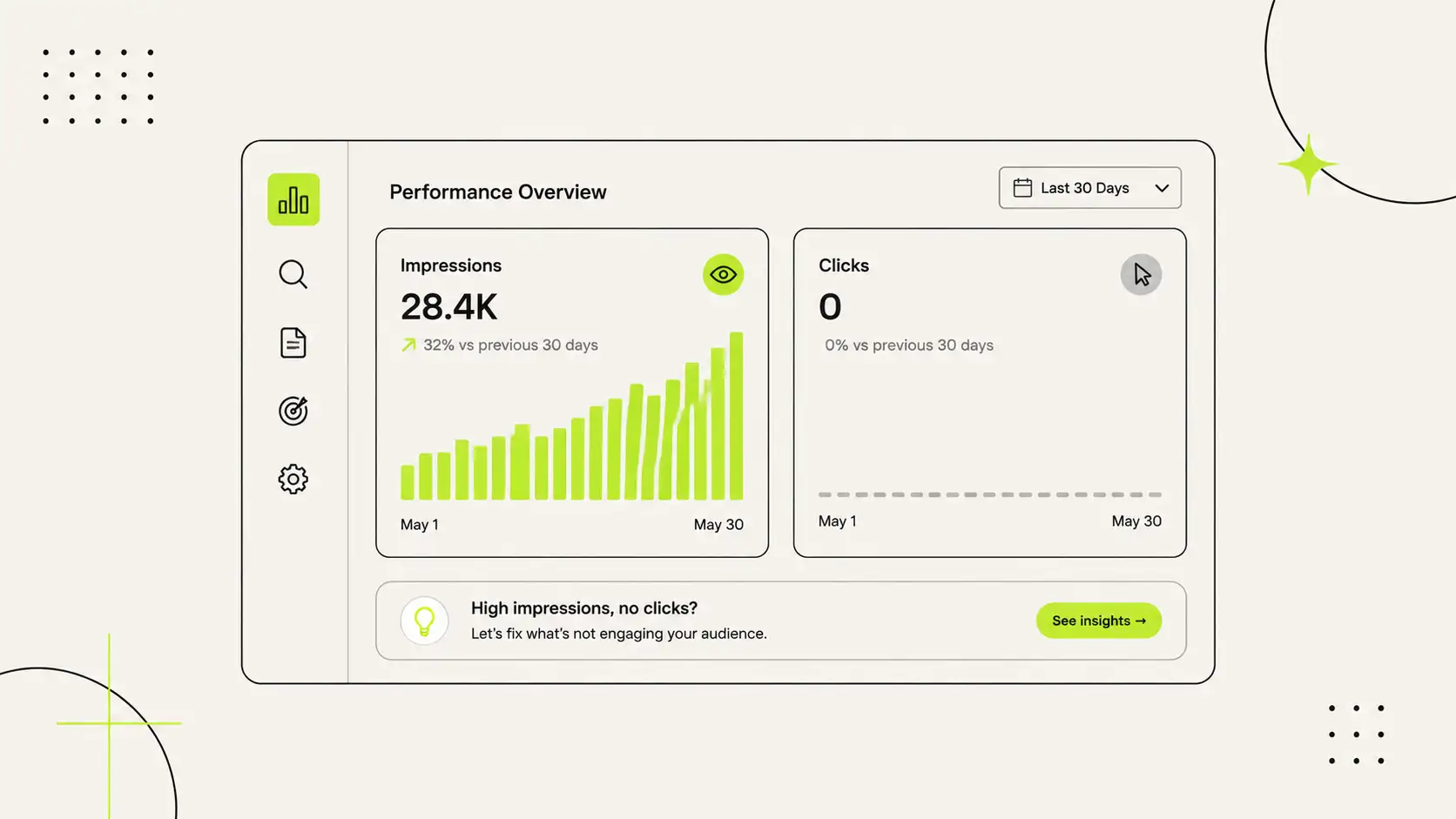
You open Search Console and it looks like good news. Impressions are climbing. Thousands of them. Google is showing your pages to people. And then you look at the clicks column, and it's almost flat. All that visibility, and hardly anyone is actually coming to your site.
It's a strange, deflating feeling — like standing in a busy market with a stall nobody stops at. But it's not a mystery. Impressions with no clicks almost always come down to one of a few specific problems, and most of them are fixable in an afternoon.
Quick Answer
You're getting impressions but no clicks because your pages are being shown but not chosen. Usually it's one of these:
- You're ranking on page two or at the bottom of page one, where few people look.
- Your title and description don't make anyone want to click.
- The search shows an answer (an AI Overview, a featured snippet, a map pack) that satisfies people before they reach you.
- You're appearing for searches that don't actually match what you offer.
The fix depends on which one is happening — so the first job is to read your own data properly.
First, understand what an impression really is
An impression just means your page appeared in the results for a search. That's all. It doesn't mean you were near the top, or that the search was even relevant to you.
So "lots of impressions, no clicks" isn't automatically a problem with your page. Sometimes it means Google is showing you for the wrong searches, or in a position nobody scrolls to. You need to separate those cases before you start rewriting anything.
The 5-minute diagnosis
Go to Search Console, open the Performance report, and look at two columns together for your pages: average position and CTR (click-through rate). This tells you which problem you have.
If your average position is low (page two, or below the top few): People aren't clicking because they aren't seeing you. This is a ranking problem, not a title problem. No amount of clever wording fixes a result buried on page two.
If your position is high (top of page one) but CTR is still low: Now it's a choice problem. You're being seen and not picked. That points to your title, your description, or something on the results page stealing the click. This is the good case — it's the most fixable.
Filter by individual queries and pages to find the specific ones with high impressions and near-zero clicks. Those are your targets.
Why people see you but don't click
Once you know it's a choice problem, here's what's usually behind it.
Your title doesn't earn the click. This is the most common cause. A vague, generic, or truncated title gives people no reason to pick you over the result above and below. "Home - Services - Company Name" never beats a title that promises a clear answer.
Your meta description is weak or missing. When you don't write one, Google pulls a random sentence from your page, and it often reads badly. A clear description that tells people what they'll get can lift clicks noticeably.
The search result answers the question without you. If an AI Overview, a featured snippet, or a "People also ask" box answers the query right there, many people never click any result. You appeared, they got what they needed, they moved on. This is increasingly common and it's reshaping what a healthy CTR even looks like.
A map pack or ads pushed you down the visible page. You might be "position 6" on paper, but on the actual screen you're below a map, three ads, and an AI answer. Technically shown. Practically invisible.
You're matching the wrong intent. If you rank for a search where people want something you don't offer, they won't click — and they shouldn't. Those impressions were never going to convert. That's not a CTR problem; it's a targeting mismatch.
How to fix a low click-through rate
For the pages where you're seen but not chosen, here's the work.
- Rewrite the title to make a promise. Say what the reader gets, plainly. Lead with the specific benefit or answer, not your brand name. "How to Fix Slow WordPress Sites (7 Real Causes)" beats "WordPress Tips | Agency Name."
- Write a real meta description. One or two clear sentences that tell people what's on the page and why it's worth the click. Don't leave it to Google.
- Match the format that's ranking. If people want a quick answer and you offer a wall of text, the promise in your title should signal clarity and speed.
- Add structured data where it fits. Elements like FAQs or review stars can make your result stand out on the page, though they're never guaranteed.
- Then wait and re-check. Titles and descriptions take time to be re-crawled and to gather new click data. Give it two to four weeks, then compare CTR before and after.
Common mistakes
- Rewriting titles when the real issue is position. If you're on page two, fix relevance and depth, not wording. You're polishing a sign nobody can see.
- Chasing impressions as a goal. Impressions aren't the point. Ten thousand impressions on an irrelevant search are worth less than fifty on a buyer's search.
- Keyword-stuffing the title. Cramming keywords makes titles unreadable and lowers clicks. Write for the human deciding whether to tap.
- Ignoring intent. If the wrong people are seeing you, the answer isn't a better title — it's targeting the right search in the first place.
When low clicks aren't worth fixing
Sometimes the honest answer is: leave it. If a page pulls huge impressions from searches that will never become customers — informational curiosity, the wrong country, an unrelated meaning of your keyword — a low CTR there is fine. Those clicks wouldn't have paid you anyway.
The metric that matters isn't clicks in general. It's clicks from people who might actually buy. A page with modest impressions and a strong CTR from the right searches beats a page with huge impressions and clicks from the wrong ones. Chase quality, not the graph.
Ritesh's Take
Before I touch a single title, I look at average position. That one column decides everything. High impressions with a low position is a ranking job. High impressions with a high position and low CTR is a copywriting job. People waste weeks rewriting titles for pages stuck on page two, where the wording was never the problem.
And I'd add this: rising impressions with falling clicks is becoming normal, not broken. As AI answers and rich results handle more simple questions on the results page itself, the click you want is the one from someone who needs more than a quick answer — a buyer, not a browser. Optimise for that click. Don't mourn the ones that were only ever going to read a snippet.
If your position itself is the problem, that's a different fix — start with why your website isn't ranking in the first place.
FAQ
What's a good click-through rate? It varies by position and search type, so don't chase a universal number. Compare your pages against each other and against their own past. A high-position page with a low CTR is the clear signal to act on.
Do AI Overviews reduce my clicks? Often, yes, for simple informational searches — people get the answer without clicking. This is why targeting searches that need deeper help, not quick facts, matters more than ever.
How long until a new title improves clicks? Google needs to re-crawl the page and gather fresh click data. Give it two to four weeks before judging the change.
Should I write meta descriptions for every page? For important pages, yes. Google may still rewrite it, but a clear description gives you the best shot at controlling the pitch and often improves clicks.
The one thing to do next
Open Search Console, sort your pages by impressions, and look at position and CTR side by side. If position is low, fix ranking. If position is high and CTR is low, rewrite the title and description to make a clear promise. Don't guess which one you have — the two columns tell you.
Want me to find the exact pages losing you clicks and rewrite the titles and descriptions that will win them back? Get a free title & meta CTR audit and I'll show you where you're being seen but not chosen — and how to fix it.