Why Are My Competitors Ranking Higher Than My Business?
Your competitor sits above you on Google even though your business is better. Here's the real reason — and a page-vs-page method to find and close the exact gap.
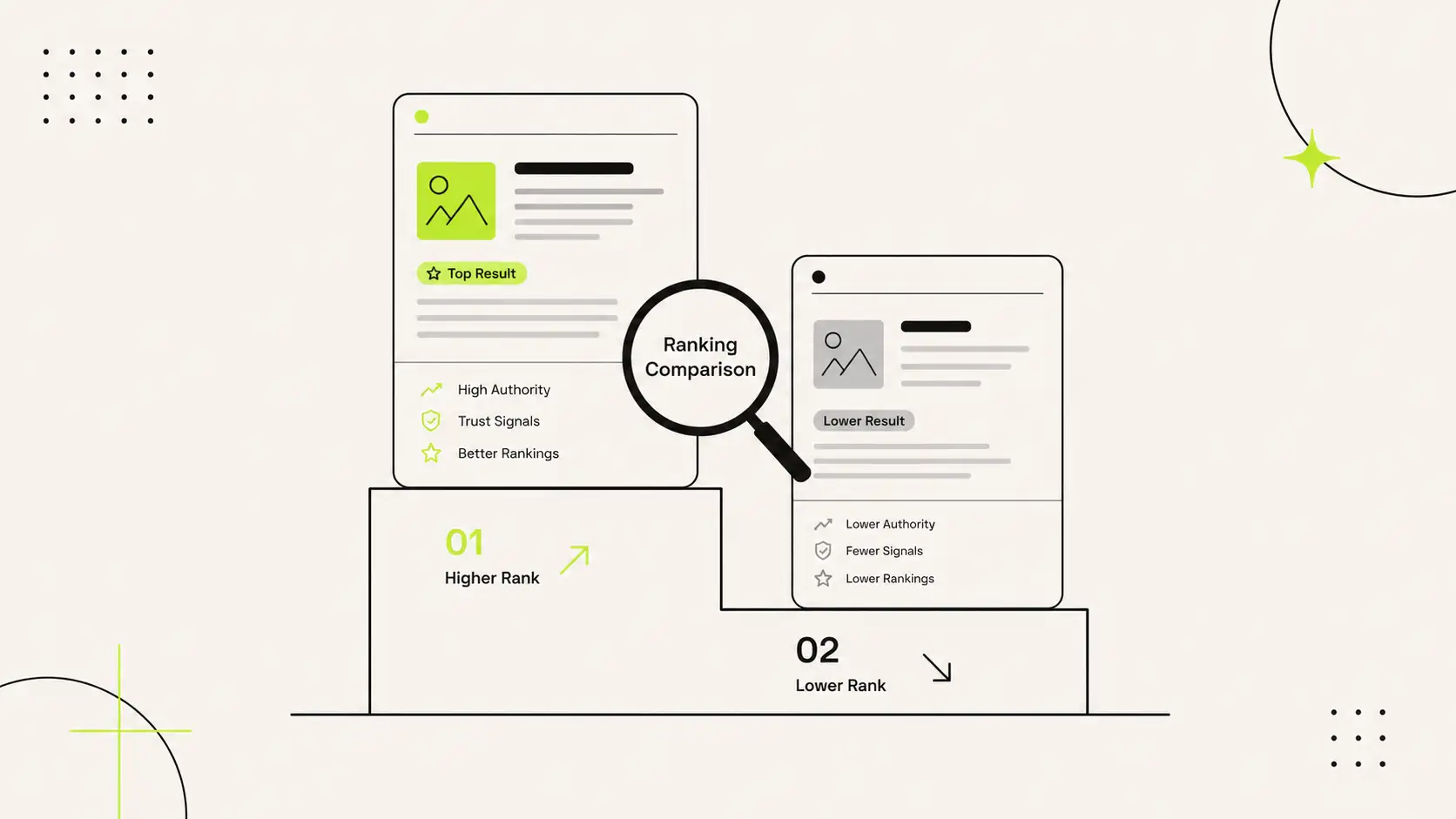
You know your product is better. Your service is better. Your website even looks better. And yet, every time you search the keyword that should be yours, a competitor sits above you. Again.
It's one of the most frustrating things in business, because it feels unfair. But here's the hard truth that makes it fixable: Google doesn't rank the best business. It ranks the best-optimised page for that specific search. Your competitor isn't beating you everywhere — they're beating one page, on one keyword, on the handful of things Google actually measures.
Once you see it that way, this stops being a mystery and becomes a checklist.
Quick Answer
Your competitor ranks higher because, on the specific factors Google measures for that one search, their page is currently ahead of yours. Usually it's one or more of these:
- Their page matches the searcher's intent better than yours.
- Their content is more specific and complete for that exact question.
- They have more credible websites linking to them.
- They've been doing this longer, with more pages and more history.
- Their page loads faster and is easier to use.
It's rarely one thing, and it's almost never a secret. It's a gap — and gaps can be closed.
Drop the "they have a secret" assumption
The question almost always carries a hidden belief: that the competitor is doing something clever or unfair. In my experience, they usually aren't. They're just ahead on the boring fundamentals — relevance, depth, links, speed, trust — and doing more of what Google rewards than you are right now.
That's good news. A secret advantage is hard to copy. A gap in fundamentals is something you can measure and beat.
One myth to kill first: running Google Ads does not lift your organic rankings. They're separate systems, and Google has been clear about this for years. What you might be seeing is a competitor who does both — strong organic and paid ads on the same search. The ads aren't causing the ranking. Don't copy the wrong move.
Google ranks pages, not websites
This is the single most useful idea in this whole topic, so sit with it.
Your competitor doesn't outrank your website. They outrank a specific page for a specific keyword. That means you don't need to "beat their whole company." You need to beat one page. That's a much smaller, winnable fight.
A quick example. Say you offer three services and cram them all onto one "Our Services" page, two sentences each. Your competitor has a full, dedicated page for each one — "kitchen installation in Dwarka," "modular wardrobe design in Dwarka," and so on — each answering the real questions a buyer asks. Google can see that depth and specificity. It ranks the focused page over the crammed one, every time. You can't bluff your way past this with a prettier design.
The page-vs-page gap check
Stop reading lists of ten reasons and go find your reason. Here's the method I use. Pick one keyword you're losing, open your page and the competitor's page beating you, side by side, and score yourself honestly on six things.
- Intent match. What does this search actually want — a guide, a product page, a local option, a comparison? Does your page match that format, or did you build the wrong type of page?
- Depth and specificity. Do they answer the exact question more completely? Do they cover the follow-up questions ("how long does it take," "how much does it cost") right on the page while you stay general?
- Freshness. When was their page last updated versus yours? A page updated this year usually beats one untouched for three.
- Links and trust. Do more credible sites link to their page? Have they simply been around longer, earning history you haven't?
- Speed and experience. Does their page load faster and read cleanly on a phone, while yours is slow or cluttered?
- Answer position. Do they answer in the first sentence while your page makes the reader scroll to find it?
Wherever you're clearly behind, that's your gap. Fix the biggest one or two first. You rarely need to win all six — you need to stop losing the ones that matter for that search.
How to actually close the gap
Once you know where you're behind, the work is specific, not vague.
- Losing on intent? Rebuild the page as the type of result that's ranking. Don't put a sales page where Google wants a guide.
- Losing on depth? Answer the real questions fully. Add the specifics, the examples, the "how much / how long / what's included" that buyers actually want. Depth, not padding.
- Losing on structure? Split a crammed page into focused pages, one clear intent each.
- Losing on links? Earn a few genuine ones — local organisations, suppliers, industry directories, real press. A handful of credible links beats a hundred junk ones.
- Losing on speed? Compress images, fix the slow elements, make it work on mobile.
And pick your battles. Don't attack the most contested keyword head-on against a five-year-old competitor on day one. Find the searches they've neglected — almost every established competitor has pages they haven't touched in years and questions they never answered. Win those first, build strength, then climb.
Common mistakes
- Chasing visual polish. Google doesn't rank for taste. A plainer page that answers faster and loads quicker will beat your beautiful, slow one.
- Comparing yourself to the wrong competitor. The site ranking above you isn't always your business rival — sometimes it's a directory, a blog, or a national brand. Know what you're actually up against before you plan.
- Fixing everything at once. Find the one or two real gaps for a specific page. Scattering effort across the whole site moves nothing.
- Copying their keywords blindly. Their strategy fits their site's strengths. Find the gaps they left open instead.
When SEO isn't the real problem
Sometimes you rank below a competitor and it genuinely doesn't matter much. If they sit at position two and you're at position four, but your page converts visitors into enquiries far better than theirs, you may be winning the part that pays. Ranking is a means, not the goal.
And sometimes the competitor simply has years of history and hundreds of legitimate links you can't match soon. Attacking that head-on is a waste. The honest move is to compete where they're weak, not where they're strong — or to ask whether a different channel (local, referrals, ads) gets you customers faster while your SEO compounds in the background.
Ritesh's Take
If I were looking at your site, I wouldn't ask "why do my competitors outrank me?" as one big question. I'd pick the three keywords that actually bring you customers, and do the page-vs-page check on each. Nine times out of ten, the reason is obvious within ten minutes — the winning page answers the exact question better, faster, and more specifically than yours.
The trap is treating ranking as a scoreboard. It isn't. A number-one ranking on a keyword that brings the wrong visitors is worth less than a number-four ranking on a keyword that brings buyers. Before you fight to outrank anyone, make sure it's a keyword worth winning. Beat them where it turns into revenue — not just where it looks good in a rank tracker.
FAQ
How do I find out which keywords my competitor ranks for that I don't? Do a keyword gap analysis with an SEO tool, or start simply: search your core services in incognito, note who consistently appears, then compare their pages to yours. Look for questions and topics they cover that you don't.
Do Google Ads help my organic rankings? No. Paid and organic are separate. A competitor may run both, but the ads aren't lifting their organic position.
My page looks better than theirs. Why do they still rank higher? Because Google ranks relevance, usefulness, speed, and trust — not visual taste. A plainer page can win every measure Google cares about while looking worse to you.
How long will it take to outrank a competitor? It depends on the gap. Closing a content or intent gap can move things in weeks to a few months. Overcoming years of links and history takes longer — which is why targeting neglected keywords first is smart.
Is it always fixable? The gap is almost always identifiable and usually fixable. Whether it's worth fixing depends on whether that keyword brings real customers.
The one thing to do next
Pick one keyword you're losing. Open your page and the competitor's page side by side. Score both on the six-point check above and find the one gap that's costing you the position. That single exercise beats reading any list of reasons — because it tells you your reason, on your page, right now.
This is the same first move I described in why your website isn't showing up on Google: diagnose the specific problem before you fix anything.
Want me to find exactly where and why your competitors are outranking you — and which gaps are worth closing first? Get a competitor SEO gap audit. I do the analysis myself and tell you honestly where the winnable positions are.