



Alt text is one of those things in SEO that people often ignore because it feels small, but it plays a big role in how search engines understand images. Whenever you add an image to a website, search engines cannot “see” it the way humans do. Instead, they rely on text descriptions to understand what that image represents. That description is called alt text.
It also improves accessibility, helping screen readers explain images to users who cannot see them. So alt text is not just about SEO, it’s also about making your website usable for everyone.
What is Alt Text (Alt Attribute)?
Alt text, also known as the alt attribute, is a short written description added to an image in HTML that explains what the image is about.
Understanding Alt Text in a Simple Way
Think of alt text like a caption that only search engines and assistive tools can read. When you look at an image, you instantly understand what it shows. But for Google, that image is just a file unless you describe it.
For example, if you upload an image of a laptop showing an SEO dashboard, writing “image123.jpg” tells nothing. But writing “SEO dashboard showing traffic growth on laptop screen” gives clear meaning.
That clarity helps search engines index your images properly and even show them in image search results.
A Simple Example
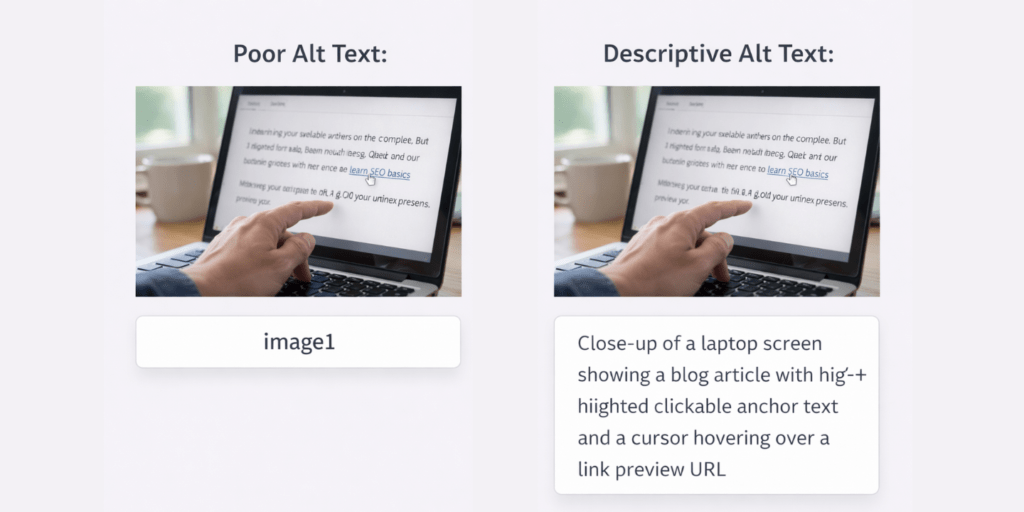
Imagine you upload an image of a person working on SEO.
Bad alt text: “image1”
Better alt text: “person analyzing SEO data on laptop”

The second one clearly explains what’s happening in the image, making it useful for both users and search engines.
How Alt Text Started
Alt text was originally introduced for accessibility, not SEO. It was designed to help visually impaired users understand images through screen readers.
As search engines evolved, they started using alt text to understand images better. Over time, it became an important part of image SEO.
Today, alt text serves both purposes — accessibility and search optimization.
Why Alt Text Matters in SEO
Search engines rely on text to understand content, and images are no exception. Alt text helps Google know what your images represent, which improves your chances of appearing in image search results.
It also adds extra context to your page. When used properly, it supports your content and strengthens keyword relevance without forcing it.
For businesses, this means more visibility, especially from image searches, which can bring additional traffic.
How Alt Text Works
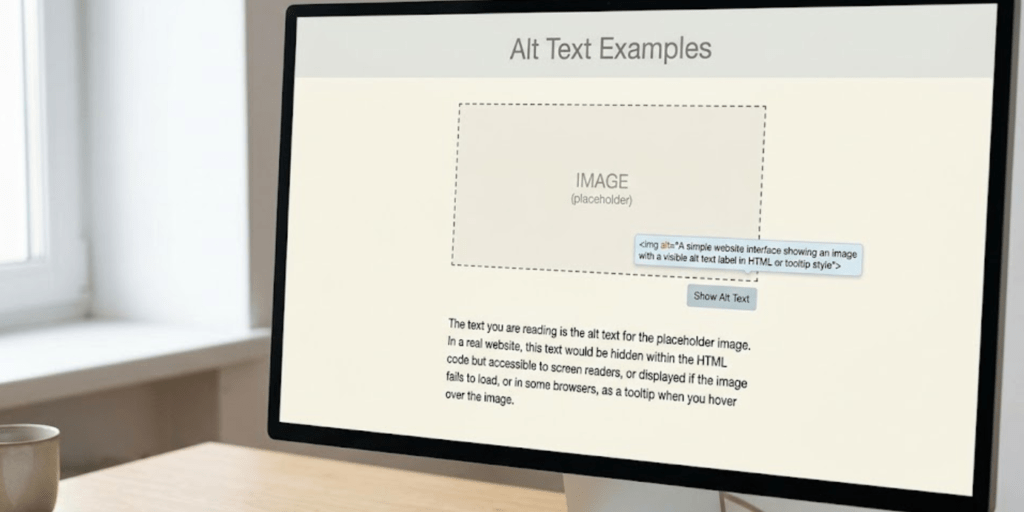
When you add alt text to an image, it becomes part of your page’s HTML. Search engines read this description and use it to understand the image’s content.
If the image fails to load, the alt text is shown in its place. This ensures users still understand what was supposed to appear.
Screen readers also use alt text to describe images to users, making your website more accessible.
How to Use Alt Text Properly
The best way to write alt text is to describe the image clearly and naturally. Focus on what is actually happening in the image rather than trying to force keywords.
If the image is relevant to your content, you can include keywords, but only where they make sense. The goal is to describe, not to stuff keywords.
Short, clear descriptions work best. You don’t need to write long sentences, just enough to explain the image accurately.
Common Mistakes People Make
One of the biggest mistakes is keyword stuffing. Many people try to add multiple keywords into alt text, which makes it unnatural and less useful.
Another mistake is leaving alt text blank. This means you lose both SEO value and accessibility benefits.
Using generic descriptions like “image” or “photo” is also not helpful. It doesn’t give any meaningful information about the content.
Practical Tips to Improve Alt Text
A simple way to improve your alt text is to describe the image as if you are explaining it to someone who cannot see it.
Keep it natural, relevant, and specific. Avoid unnecessary words and focus on clarity.
Over time, as you optimize more images, you’ll start seeing better visibility in image search and improved overall SEO performance.
Final Thoughts
Alt text may seem like a small detail, but it plays an important role in both SEO and user experience. It helps search engines understand your images and makes your website accessible to a wider audience.
If you want to build a strong SEO foundation, don’t ignore your images. Optimizing alt text is a simple step that can bring long-term benefits.
👉 Next step: explore more SEO terms in our A–Z glossary and keep learning step by step 🚀


No Comments