

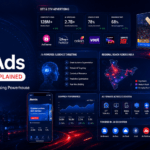
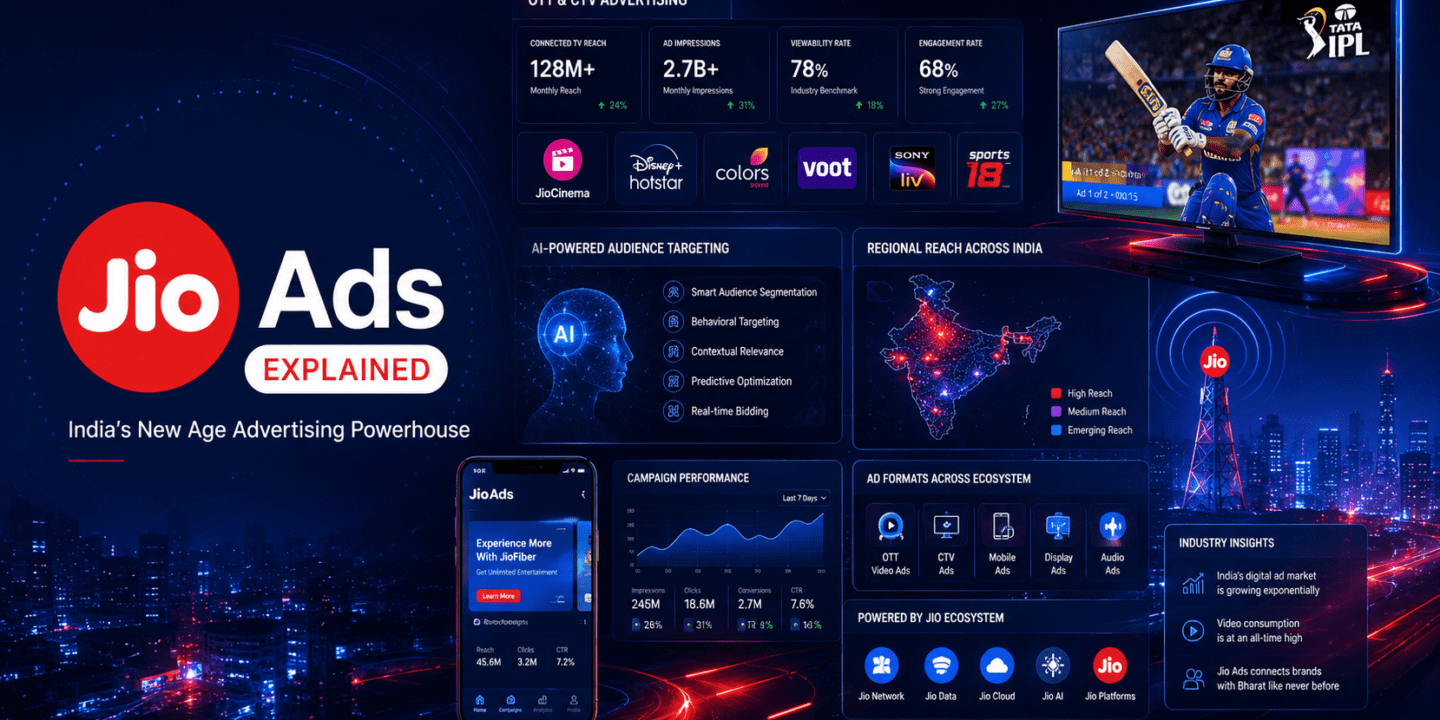
India’s digital advertising industry is entering a completely new era, and this time the disruption is not coming from Google or Meta. It is coming from the massive ecosystem built by Reliance Jio.
For years, businesses in India mainly depended on two platforms for online advertising:
- Google Ads for search intent
- Meta Ads for social media discovery
But now, Jio Ads is positioning itself as a serious third player in the market by combining telecom data, OTT entertainment, connected TV, retail commerce, mobile behavior, and regional audience targeting into one advertising ecosystem.
And honestly, this is bigger than just another ad platform launch.
With platforms like JioHotstar, JioCinema integration, connected TV expansion, IPL streaming dominance, and millions of active users across India, Jio now has something most ad platforms don’t fully control — user attention across multiple digital environments.
That changes everything for marketers.
Imagine being able to target users based on:
- regional preferences
- entertainment consumption
- mobile behavior
- shopping signals
- telecom-level audience insights
- connected TV viewing habits
All inside one ecosystem.
This is exactly why marketers, agencies, startups, D2C brands, and local businesses are suddenly paying attention to Jio Ads.
For businesses targeting Tier 2 and Tier 3 India especially, the opportunity could become massive over the next few years. Jio already has deep penetration across smaller cities and regional audiences where traditional digital advertising platforms sometimes struggle with reach, language personalization, and localized engagement.
At the same time, OTT advertising in India is exploding.
People are spending more time on:
- smart TVs
- live sports streaming
- mobile entertainment
- regional OTT content
- IPL streaming ecosystems
And advertisers are following that attention shift.
That’s where Jio Ads enters the game.
In this guide, we’ll break down:
- what Jio Ads actually is
- how the platform works
- Jio Ads targeting features
- JioHotstar advertising opportunities
- OTT and connected TV advertising
- pricing expectations
- Jio Ads vs Google Ads vs Meta Ads
- and why this platform could reshape digital advertising in India over the next few years.
What Is Jio Ads?
Jio Ads is a digital advertising platform developed by Reliance Jio that allows businesses to run advertisements across the broader Jio ecosystem, including mobile apps, OTT platforms, connected TVs, digital content platforms, and commerce-driven environments.
In simple words, Jio Ads helps brands reach users through:
- mobile advertising
- OTT advertising
- connected TV ads
- in-app ads
- video advertising
- regional audience targeting
- commerce-driven advertising campaigns
Unlike traditional advertising platforms that rely mostly on search behavior or social engagement, Jio Ads is building an ecosystem-driven advertising model powered by user activity across telecom, entertainment, streaming, and digital consumption.
This gives advertisers access to a huge Indian audience base spread across:
- smartphones
- smart TVs
- streaming platforms
- regional content ecosystems
- sports streaming events like IPL
- digital commerce integrations
One of the biggest reasons Jio Ads is getting attention so quickly is because of the scale of the Jio ecosystem itself.
Reliance Jio already has hundreds of millions of users across India, including strong penetration in Tier 2 and Tier 3 cities. That gives the platform a major advantage for businesses trying to reach regional Indian audiences at scale.
Another major factor is the rise of JioHotstar and OTT advertising.
As users spend more time watching:
- live sports
- IPL matches
- movies
- regional entertainment
- connected TV content
advertisers are shifting budgets toward high-attention video ecosystems instead of relying only on traditional social media ads.
This is where Jio Ads becomes interesting.
The platform is trying to combine:
- telecom intelligence
- entertainment behavior
- regional consumption patterns
- commerce signals
- OTT engagement
- cross-device targeting
into one advertising infrastructure.
For marketers, this could eventually create a new advertising channel that sits somewhere between:
- Google’s intent-driven advertising
- Meta’s social discovery advertising
- Amazon’s commerce advertising model
And because the platform is still relatively new, many businesses are exploring it early to understand whether Jio Ads can become the next major growth channel in India’s digital marketing ecosystem.
Why Jio Ads Is Suddenly Trending in India
Over the past few months, Jio Ads has gone from being a relatively low-discussed advertising platform to one of the biggest conversations in India’s digital marketing industry.
And the reason is simple:
Reliance Jio is no longer just a telecom company.
It is now building a complete digital ecosystem that includes:
- OTT streaming
- sports broadcasting
- connected TV platforms
- commerce integrations
- mobile services
- regional content distribution
- entertainment ecosystems
- data-driven advertising infrastructure
That combination gives Jio Ads something extremely powerful — attention at scale.
For years, advertisers mainly depended on:
- Google to capture search intent
- Meta to drive social discovery
But Jio is entering the market from a completely different angle:
it already owns massive user attention across entertainment and connectivity.
The biggest accelerator behind this momentum is JioHotstar and live sports streaming.
India’s OTT audience has exploded, especially during:
- IPL seasons
- cricket tournaments
- live sports events
- regional entertainment streaming
- smart TV adoption growth
Millions of users now spend hours consuming content on streaming platforms instead of traditional television or even social media.
That creates a premium advertising opportunity.
Unlike short-scroll social media ads, OTT ads often get:
- higher watch time
- better visibility
- stronger attention retention
- full-screen engagement
- family-level viewing exposure on smart TVs
This is why connected TV advertising and OTT advertising are becoming massive growth sectors in India.
At the same time, marketers are also becoming more interested in first-party data ecosystems.
With increasing privacy regulations and changes in third-party tracking, platforms that own direct consumer ecosystems are becoming more valuable. Since Jio operates across telecom, entertainment, and digital services, advertisers believe the platform could eventually offer stronger audience intelligence and regional targeting capabilities.
Another reason Jio Ads is trending is India’s rapidly growing Tier 2 and Tier 3 internet audience.
Many brands struggle to effectively reach regional consumers through traditional advertising platforms because:
- language personalization is limited
- regional content consumption differs
- local behavior patterns vary significantly
But Jio already has deep market penetration across smaller cities and regional audiences, making it highly attractive for:
- D2C brands
- local businesses
- political campaigns
- EdTech companies
- healthcare brands
- real estate companies
- regional ecommerce sellers
There’s also a strong “early mover advantage” mindset happening right now.
Whenever a new advertising ecosystem emerges, marketers rush to test it before:
- competition increases
- ad costs rise
- inventory becomes saturated
The same thing happened with:
- Facebook Ads in early years
- Instagram Ads
- YouTube Shorts advertising
- Amazon Ads
- TikTok Ads globally
Now many businesses are asking:
“Could Jio Ads become the next major advertising channel in India?”
And that’s exactly why the platform is suddenly everywhere in marketing conversations, LinkedIn discussions, startup communities, and digital advertising trends.
How Jio Ads Works
At its core, Jio Ads works as an ecosystem-based advertising platform that allows businesses to reach users across multiple digital touchpoints inside the Reliance Jio network.
Instead of focusing on only one environment like search engines or social media feeds, Jio Ads is designed to distribute advertising across:
- OTT platforms
- mobile apps
- connected TVs
- digital streaming services
- in-app ecosystems
- regional content platforms
- commerce-driven environments
This multi-platform approach is one of the biggest reasons marketers are paying close attention to Jio Ads.
Because user attention today is fragmented.
People are no longer spending all their time on just:
- Google Search
They are now consuming content across:
- smart TVs
- OTT apps
- cricket streaming
- mobile entertainment
- regional video platforms
- digital commerce ecosystems
Jio Ads is trying to unify those attention channels into one advertising infrastructure.
Audience Targeting
One of the most important parts of any advertising platform is targeting, and this is where Jio Ads could become extremely powerful in the Indian market.
The platform is expected to support targeting based on:
- demographics
- interests
- device behavior
- content consumption
- regional preferences
- language targeting
- location targeting
- behavioral patterns
For businesses targeting India’s regional internet audience, this could become a major advantage.
Especially for:
- Hindi-speaking markets
- regional OTT viewers
- Tier 2 and Tier 3 users
- mobile-first consumers
Regional advertising in India is growing rapidly, and platforms that understand localized audience behavior will likely dominate future digital advertising.
OTT Advertising
A huge part of Jio Ads revolves around OTT advertising.
OTT (Over-The-Top) advertising means showing ads on streaming platforms instead of traditional television.
This includes:
- movies
- sports streaming
- TV shows
- live events
- connected TV content
With platforms like JioHotstar attracting massive audiences during events like IPL, advertisers now have access to premium video inventory with high viewer attention.
Compared to traditional social ads, OTT ads usually offer:
- larger screen visibility
- stronger brand recall
- better completion rates
- less distraction
- premium audience attention
This is why many experts believe OTT advertising in India could become one of the fastest-growing digital ad categories over the next few years.
Connected TV Advertising
Connected TV (CTV) advertising is another major area where Jio Ads could grow aggressively.
Connected TVs include:
- smart TVs
- Android TVs
- streaming-enabled television devices
As more Indian households shift toward smart TV entertainment, advertisers are looking for ways to bring digital targeting into television-style advertising experiences.
CTV advertising combines:
- TV-level attention
with - digital-level targeting
This creates a premium environment for:
- automobile brands
- luxury products
- fintech apps
- ecommerce brands
- healthcare companies
- EdTech platforms
The biggest advantage?
Users are highly engaged because content is being consumed in full-screen entertainment mode rather than fast-scrolling environments.
Commerce & Signal-Based Advertising
One of the most interesting directions Jio Ads is moving toward is commerce-driven advertising.
Instead of relying only on broad audience categories, future campaigns may increasingly use:
- purchase intent signals
- shopping behavior
- commerce engagement patterns
- digital activity insights
Globally, advertising platforms are shifting toward signal-led advertising ecosystems where ads are optimized using real behavioral data rather than only demographic assumptions.
This could become especially powerful for:
- ecommerce brands
- quick commerce companies
- D2C businesses
- app-based services
- regional retail brands
If Reliance successfully combines telecom, OTT, retail, and commerce ecosystems together, Jio Ads could eventually create one of the most unique advertising ecosystems in India.
Regional & Hyperlocal Targeting
Another major advantage of Jio Ads is its potential strength in hyperlocal and regional advertising.
Many Indian businesses don’t need nationwide reach.
They need:
- city-level targeting
- regional language audiences
- neighborhood-specific visibility
- hyperlocal customer acquisition
Jio’s deep penetration across India may allow businesses to target users more effectively based on:
- state
- district
- language
- regional content behavior
- local audience interests
For local businesses and regional brands, this could become one of the most valuable aspects of the platform.
Jio Ads Features Explained
One of the biggest reasons marketers are getting excited about Jio Ads is because the platform is not positioning itself as just another basic ad network.
Instead, Reliance Jio is building a full-scale advertising ecosystem designed around India’s evolving digital consumption habits.
From OTT advertising and connected TV campaigns to regional targeting and commerce-led ads, Jio Ads is introducing features that align with where digital advertising is heading in the next few years.
Here are some of the most important Jio Ads features businesses and marketers should understand.
Self-Serve Advertising Platform
One of the most important developments is the rise of self-serve advertising inside the Jio ecosystem.
A self-serve platform allows businesses to:
- create campaigns
- upload creatives
- define targeting
- manage budgets
- monitor analytics
without needing large enterprise advertising teams.
This is important because it opens the door for:
- startups
- local businesses
- D2C brands
- freelancers
- agencies
- SMBs
to experiment with OTT and digital advertising more easily.
If Jio continues expanding self-serve capabilities, it could dramatically increase adoption among small and medium-sized businesses across India.
OTT Video Advertising
Video advertising is becoming the center of modern digital marketing, and Jio Ads is heavily focused on OTT inventory.
Businesses can potentially run:
- pre-roll ads
- mid-roll ads
- full-screen video ads
- sports-streaming ads
- premium entertainment ads
across streaming ecosystems connected to JioHotstar and related digital platforms.
OTT ads often perform differently compared to traditional social ads because users are actively consuming long-form entertainment rather than casually scrolling.
This usually leads to:
- stronger viewer attention
- higher engagement
- better brand recall
- premium audience perception
For brands focused on awareness and visibility, this can become a major advantage.
Connected TV (CTV) Advertising
Connected TV advertising is expected to become one of the fastest-growing digital ad segments in India.
Jio Ads is positioning itself strongly in this space by enabling brands to advertise directly on smart TV ecosystems.
This allows advertisers to combine:
- digital audience targeting
with - television-style viewing experiences
CTV advertising is especially powerful for:
- premium brands
- automotive companies
- fintech startups
- ecommerce businesses
- healthcare brands
- EdTech platforms
because users typically watch content on larger screens with higher attention levels.
As smart TV adoption grows in Indian households, CTV advertising may become a major competitive advantage for the Jio ecosystem.
Regional Language Advertising
India is not a single-language market.
And one of the biggest mistakes advertisers make is running campaigns only in English or generic Hindi.
Jio Ads has strong potential in regional language advertising because of its deep reach across:
- Tier 2 cities
- Tier 3 cities
- regional mobile users
- localized entertainment audiences
This could allow businesses to create campaigns in:
- Hindi
- Tamil
- Telugu
- Bengali
- Marathi
- Punjabi
- Kannada
and other regional languages.
For brands targeting mass Indian audiences, regional personalization can significantly improve:
- engagement
- click-through rates
- ad relevance
- customer trust
AI & Data-Driven Targeting
Modern advertising is becoming increasingly data-driven, and Jio Ads is expected to leverage behavioral signals and audience intelligence across its ecosystem.
This may include targeting based on:
- viewing behavior
- app activity
- content interests
- geographic preferences
- entertainment consumption
- engagement patterns
As advertising platforms evolve, AI-driven targeting will likely become one of the biggest competitive factors in campaign performance.
The platforms that best understand user behavior usually deliver:
- better ad personalization
- stronger audience segmentation
- improved conversion efficiency
This is why many marketers are closely watching how Jio develops its advertising intelligence capabilities over time.
Hyperlocal Advertising Opportunities
One of the most underrated opportunities inside Jio Ads could be hyperlocal advertising.
Most Indian businesses don’t necessarily need national visibility.
They need:
- local customers
- city-level targeting
- regional awareness
- neighborhood reach
Jio’s strong telecom footprint may eventually help businesses target audiences more effectively at local and regional levels.
This could become valuable for:
- restaurants
- clinics
- gyms
- educational institutes
- local retailers
- real estate companies
- service businesses
especially in high-growth urban and semi-urban markets.
Cross-Device Advertising Ecosystem
Consumers today move across multiple devices throughout the day.
For example:
- mobile during work
- smart TV during evenings
- streaming apps during weekends
Jio Ads is attempting to build an ecosystem where advertisers can potentially reach users across multiple touchpoints instead of relying on a single platform experience.
This type of cross-device advertising can improve:
- campaign consistency
- brand visibility
- audience frequency
- conversion journeys
And that’s a major reason why advertisers are beginning to view Jio Ads as more than just another OTT ad platform.
Who Should Use Jio Ads?
Jio Ads is not just built for massive enterprise brands with huge advertising budgets.
The platform has the potential to become useful for businesses of all sizes — especially brands trying to reach India’s rapidly growing digital audience through OTT, regional content, connected TVs, and mobile-first ecosystems.
Because Reliance Jio already has deep penetration across urban and regional India, different industries may benefit from the platform in very different ways.
Here’s who could benefit the most from Jio Ads.
D2C Brands
Direct-to-consumer brands are constantly searching for:
- cheaper customer acquisition
- higher attention advertising
- stronger brand recall
- scalable audience targeting
Traditional Meta advertising has become increasingly competitive and expensive in many industries.
That’s why many D2C brands are now exploring:
- OTT advertising
- connected TV campaigns
- regional audience targeting
- commerce-driven ads
Jio Ads could become especially valuable for D2C brands focused on:
- beauty products
- fashion
- supplements
- electronics
- wellness products
- home decor
- FMCG products
because these categories perform strongly in visual and video-first environments.
Local Businesses & Hyperlocal Brands
One of the biggest opportunities inside Jio Ads may come from hyperlocal advertising.
Many Indian businesses do not need nationwide reach.
They need visibility within:
- specific cities
- neighborhoods
- districts
- regional markets
This makes Jio Ads potentially valuable for:
- clinics
- salons
- gyms
- cafes
- restaurants
- coaching centers
- local retail stores
- real estate agencies
If Jio expands hyperlocal targeting capabilities, local businesses could use OTT and mobile advertising to build awareness within nearby audiences more effectively.
For example:
a gym in Delhi could eventually target users watching fitness content or sports streaming within specific PIN codes or local regions.
That level of regional advertising could become very powerful for small businesses.
Real Estate Companies
Real estate marketing in India is becoming increasingly digital.
Builders and property consultants now heavily rely on:
- lead generation ads
- video campaigns
- regional awareness campaigns
- connected TV visibility
Jio Ads may become attractive for real estate brands because:
- property buying decisions involve high attention
- video walkthroughs perform well
- regional targeting matters heavily
- smart TV advertising improves visibility
Connected TV campaigns especially could help luxury or premium projects build stronger brand positioning.
Healthcare & Wellness Brands
Healthcare businesses are also becoming more active in digital advertising.
This includes:
- clinics
- hospitals
- nutrition brands
- wellness startups
- skincare companies
- fitness platforms
OTT advertising and regional awareness campaigns can help healthcare brands educate audiences in a more engaging environment compared to standard display ads.
Since healthcare often relies heavily on trust and visibility, high-attention advertising formats may perform better than short-scroll social ads alone.
EdTech & Online Learning Platforms
India’s online education market is still growing rapidly.
EdTech companies constantly need:
- large-scale reach
- regional visibility
- parent-focused advertising
- student acquisition campaigns
Jio Ads could become useful for:
- online courses
- coaching institutes
- language learning apps
- upskilling platforms
- career-focused education brands
especially because OTT and connected TV environments allow longer storytelling and stronger educational messaging.
Political & Public Awareness Campaigns
Regional advertising and mass audience reach are extremely important for political campaigns and public awareness initiatives.
Since Jio has strong penetration across multiple Indian states and regional markets, the platform could become useful for:
- election campaigns
- awareness drives
- government campaigns
- public outreach programs
especially during large-scale events and high-viewership streaming periods.
Ecommerce & Quick Commerce Brands
Modern ecommerce brands need more than clicks.
They need:
- attention
- visibility
- recall
- purchase intent targeting
This is why commerce-driven advertising ecosystems are becoming important globally.
If Jio continues integrating shopping signals, OTT engagement, and behavioral targeting, ecommerce brands could use the platform to build full-funnel campaigns combining:
- awareness
- engagement
- retargeting
- conversions
This could become particularly important during:
- IPL seasons
- festive sales
- product launches
- regional shopping campaigns
where user attention across entertainment ecosystems becomes extremely high.
Agencies & Digital Marketers
Advertising agencies are always looking for:
- emerging ad platforms
- cheaper inventory
- early-stage opportunities
- new audience channels
Right now, many marketers are testing Jio Ads because early platforms often provide:
- lower competition
- lower CPMs
- higher organic attention
- untapped inventory opportunities
The same thing happened during the early days of:
- Facebook Ads
- Instagram Ads
- YouTube advertising
- Amazon Ads
That’s why agencies and performance marketers are closely monitoring how the Jio advertising ecosystem evolves over the next few years.
Jio Ads vs Google Ads vs Meta Ads
One of the biggest questions marketers are asking right now is:
“Can Jio Ads actually compete with Google Ads and Meta Ads?”
The answer is interesting because Jio Ads is not trying to copy either platform completely.
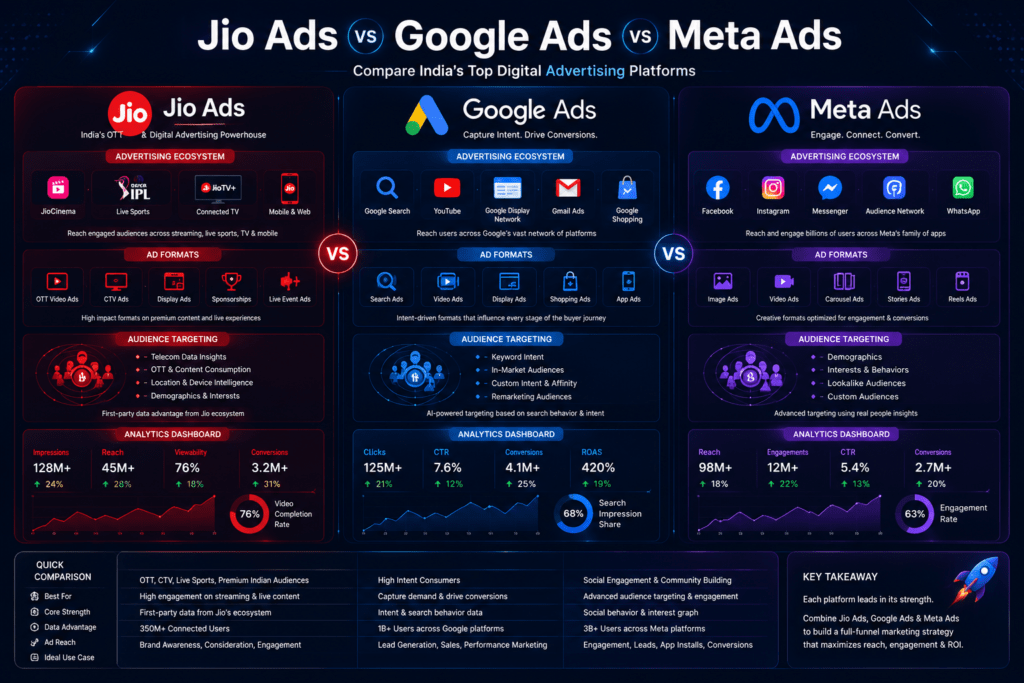
Instead, Reliance Jio is building a different type of advertising ecosystem focused on:
- OTT attention
- entertainment behavior
- connected TV consumption
- regional audience reach
- telecom-scale data ecosystems
To understand where Jio Ads fits, we first need to understand how each major advertising platform works.
| Platform | Primary Strength | Best For | Biggest Advantage | Biggest Limitation |
|---|---|---|---|---|
| Google Ads | Search Intent | Capturing active buyers | High purchase intent | Expensive CPC in competitive industries |
| Meta Ads | Social Discovery | Product discovery & engagement | Massive audience scale | Lower attention span |
| Jio Ads | OTT & Ecosystem Attention | Video, regional & connected TV advertising | High-attention environments | Still evolving platform |
Google Ads: Capturing Intent
Google Ads dominates because it captures users at the exact moment they are searching for something.
For example:
- “best running shoes”
- “dentist near me”
- “buy gaming laptop”
- “SEO agency in Delhi”
This is called intent-driven advertising.
The user already wants something, and Google helps businesses appear in front of that demand.
That’s why Google Ads performs extremely well for:
- lead generation
- ecommerce conversions
- local business inquiries
- high-intent search traffic
But there’s also a downside.
As competition increases:
- CPCs rise
- industries become saturated
- smaller businesses struggle with budgets
This is why brands continuously look for alternative attention channels.
Meta Ads: Creating Demand
Meta Ads works differently.
Instead of capturing existing intent, Meta platforms like:
- Threads
focus heavily on discovery-based advertising.
Users are not actively searching.
Instead, brands interrupt attention through:
- reels
- stories
- feeds
- visual content
- interest targeting
Meta advertising works extremely well for:
- D2C brands
- impulse products
- visual storytelling
- remarketing
- audience scaling
But attention spans on social media are becoming shorter.
Users scroll rapidly, competition is intense, and creative fatigue happens very quickly.
That’s why advertisers are increasingly exploring higher-attention environments like OTT and connected TV.
Jio Ads: Capturing Attention Ecosystems
This is where Jio Ads becomes different.
Instead of relying only on:
- search intent
or - social scrolling
Jio Ads focuses on capturing user attention inside entertainment ecosystems.
This includes:
- OTT streaming
- IPL viewing
- connected TV watching
- regional entertainment
- long-form content consumption
The biggest advantage of OTT advertising is attention quality.
When users watch content on:
- smart TVs
- sports streams
- entertainment apps
they are often:
- highly engaged
- full-screen focused
- consuming longer sessions
- less distracted compared to social feeds
This creates stronger opportunities for:
- brand recall
- storytelling
- premium positioning
- awareness campaigns
The Real Difference: Intent vs Discovery vs Attention
The easiest way to understand all three platforms is this:
- Google captures intent
- Meta creates discovery
- Jio captures entertainment attention
That’s why many experts believe future advertising strategies will combine all three ecosystems together instead of relying on only one platform.
For example:
| Funnel Stage | Best Platform |
|---|---|
| Awareness | Jio Ads + Meta Ads |
| Interest | Meta Ads |
| Consideration | YouTube + OTT |
| Conversion | Google Ads |
| Retargeting | Meta + Google |
This type of multi-platform strategy is becoming increasingly common in modern digital marketing.
Why Marketers Are Watching Jio Ads Closely
The biggest reason marketers are paying attention to Jio Ads is because of the ecosystem advantage.
Very few companies in India control:
- telecom infrastructure
- OTT platforms
- sports streaming
- regional entertainment
- commerce ecosystems
- mobile distribution
all together.
If Jio successfully integrates these systems into one advertising engine, it could become one of the most powerful advertising ecosystems in India over the next few years.
Especially for:
- regional businesses
- D2C brands
- OTT advertisers
- connected TV campaigns
- IPL advertisers
- hyperlocal targeting
the platform may create opportunities that traditional advertising systems cannot easily replicate.
Should Businesses Replace Google or Meta With Jio Ads?
Not yet.
At least not currently.
Google Ads and Meta Ads are still significantly more mature in terms of:
- optimization systems
- audience intelligence
- reporting tools
- conversion tracking
- automation
- advertiser adoption
But Jio Ads may become a powerful additional channel for businesses wanting:
- OTT visibility
- regional scale
- connected TV advertising
- early-stage ad inventory opportunities
- high-attention video campaigns
The smartest businesses will likely treat Jio Ads as:
- an expansion channel
not - a replacement channel
at least in the early stages of platform growth.
How to Advertise on Jio Ads Platform
As Jio Ads continues expanding across OTT, connected TV, and digital ecosystems, many businesses are now asking the same question:
“How can I actually run ads on Jio?”
While the platform is still evolving, the overall advertising process is expected to work similarly to other modern self-serve ad platforms where businesses can create campaigns, define targeting, upload creatives, and monitor performance through a centralized dashboard.
Here’s a step-by-step breakdown of how businesses can advertise using Reliance Jio Ads.
Step 1: Create a Jio Ads Account
The first step is creating an advertiser account through the official Jio Ads ecosystem.
Businesses, agencies, and marketers can typically:
- register as advertisers
- create brand profiles
- set up business information
- configure campaign billing details
As the platform grows, onboarding is expected to become more streamlined for:
- startups
- SMBs
- agencies
- enterprise brands
especially through self-serve campaign systems.
Step 2: Choose Your Advertising Objective
Like most modern ad platforms, campaign setup usually begins with selecting an advertising goal.
This is important because campaign objectives influence:
- ad delivery
- optimization behavior
- audience targeting
- bidding strategies
Common campaign objectives may include:
- brand awareness
- video views
- website traffic
- app installs
- engagement campaigns
- lead generation
- reach campaigns
For OTT advertising especially, many brands focus heavily on:
- awareness
- visibility
- premium audience exposure
rather than only direct-click conversions.
Step 3: Select Audience Targeting
Targeting is one of the biggest strengths of modern digital advertising, and Jio Ads is expected to offer multiple audience segmentation options.
Businesses may be able to target users based on:
- location
- interests
- device usage
- regional preferences
- language behavior
- entertainment consumption
- OTT engagement
- connected TV activity
For Indian businesses, regional targeting can become especially valuable because consumer behavior differs heavily across:
- cities
- states
- languages
- demographic segments
This makes localized campaign personalization extremely important.
Step 4: Choose Ad Formats
Jio Ads is heavily focused on video-first and OTT advertising experiences.
Advertisers may get access to formats like:
- video ads
- OTT streaming ads
- connected TV ads
- in-app ads
- display banners
- mobile ads
- interactive ad formats
For brands targeting premium visibility, connected TV and OTT video ads could become some of the most impactful placements.
Especially during:
- IPL matches
- sports streaming
- entertainment premieres
- high-traffic events
where user engagement becomes extremely high.
Step 5: Upload Creatives
Once targeting and ad formats are selected, businesses upload campaign creatives.
This may include:
- videos
- banners
- graphics
- motion ads
- interactive creatives
Since OTT and connected TV are highly visual environments, creative quality becomes extremely important.
Unlike social media feeds where users scroll quickly, OTT viewers often watch content on:
- larger screens
- smart TVs
- immersive video environments
This means ad creatives need:
- stronger storytelling
- cleaner visuals
- high production quality
- clear brand messaging
to perform effectively.
Step 6: Set Campaign Budget & Bidding
Advertisers can then define:
- daily budgets
- total campaign spend
- bidding strategy
- campaign duration
Budgeting on OTT platforms usually works differently compared to social media advertising because premium video inventory often commands higher CPMs.
Pricing may vary depending on:
- audience targeting
- event demand
- ad placement
- streaming inventory
- sports seasonality
For example, advertising during IPL or major sports events can become significantly more expensive because of massive audience demand.
Step 7: Launch & Monitor Campaign Performance
After setup is complete, campaigns can be launched and monitored through analytics dashboards.
Businesses may track:
- impressions
- reach
- engagement
- video completion rates
- click-through rates
- audience behavior
- campaign performance trends
As the platform matures, reporting and AI-driven optimization capabilities will likely improve significantly.
This is especially important because advertisers today expect:
- detailed attribution
- conversion tracking
- audience insights
- performance analytics
- campaign automation
from modern ad ecosystems.
Best Practices Before Running Jio Ads
Businesses testing Jio Ads early should focus on experimentation rather than expecting instant scaling.
A smart approach includes:
- testing small budgets first
- experimenting with regional campaigns
- using high-quality video creatives
- targeting OTT-friendly audiences
- monitoring engagement patterns
- comparing performance against Meta and Google campaigns
Since the platform is still growing, early adopters may benefit from:
- lower competition
- cheaper inventory
- premium visibility opportunities
- first-mover advantage
before the ecosystem becomes saturated.
Is Jio Ads Worth Testing Right Now?
For many businesses, yes.
Especially if your brand focuses on:
- video marketing
- regional audiences
- OTT visibility
- connected TV advertising
- IPL campaigns
- large-scale Indian audience reach
Jio Ads may become a valuable addition to your marketing mix over the next few years.
The key is understanding that this is still an emerging advertising ecosystem — which also means the biggest opportunities usually belong to businesses that start learning the platform early.
Jio Ads Pricing & Budget: How Much Does It Cost to Advertise on Jio?
One of the biggest questions businesses have right now is:
“How expensive is Jio Ads compared to Google and Meta?”
The honest answer is:
pricing is still evolving because the platform is relatively new, and costs can vary heavily depending on:
- ad format
- audience targeting
- OTT inventory demand
- sports events
- campaign duration
- connected TV placements
- regional targeting
But understanding how OTT advertising pricing works can help businesses estimate what to expect from Reliance Jio Ads.
Jio Ads Pricing Will Likely Work on CPM Models
Unlike Google Search Ads, which often run on CPC (Cost Per Click), OTT and connected TV advertising platforms usually operate using CPM pricing.
CPM means:
Cost Per 1,000 impressions
This model is common in:
- OTT advertising
- video advertising
- streaming platforms
- connected TV campaigns
- awareness-focused advertising
The reason is simple:
OTT advertising focuses more on:
- visibility
- reach
- attention
- brand recall
rather than only direct clicks.
Why OTT Advertising Is Usually More Expensive
Many businesses compare OTT advertising costs directly with Meta Ads and assume the pricing is high.
But OTT inventory works differently.
Users on streaming platforms are often:
- highly engaged
- watching full-screen content
- spending longer session times
- less distracted compared to social feeds
This creates premium attention.
And premium attention usually costs more.
For example:
a 30-second ad shown during:
- IPL streaming
- live cricket matches
- premium entertainment
- connected TV sessions
can deliver significantly stronger brand recall compared to a fast-scrolling social media impression.
That’s why advertisers are willing to pay higher CPMs for OTT environments.
Expected Factors Affecting Jio Ads Pricing
Jio Ads pricing may vary depending on several important factors.
1. Ad Format
Different formats usually have different pricing structures.
For example:
- display ads → lower cost
- video ads → medium to high cost
- connected TV ads → premium cost
- sports-streaming inventory → very premium cost
Connected TV advertising especially tends to command higher rates because users watch content on large screens with higher attention levels.
2. Audience Targeting
Highly targeted campaigns generally cost more.
For example:
- metro city targeting
- affluent audiences
- premium device users
- IPL audiences
- high-intent viewers
may have higher competition compared to broader campaigns.
Regional and hyperlocal campaigns may sometimes offer lower CPM opportunities depending on inventory demand.
3. Event-Based Advertising
Major events can dramatically increase advertising costs.
This includes:
- IPL
- cricket tournaments
- entertainment premieres
- festive campaigns
- sports finals
During high-demand events, premium inventory becomes extremely competitive because brands fight for visibility during peak attention periods.
4. Campaign Duration & Reach
Longer campaigns with broader reach naturally require larger budgets.
Businesses running:
- nationwide campaigns
- connected TV visibility
- OTT awareness campaigns
will generally spend significantly more than small regional campaigns.
Can Small Businesses Afford Jio Ads?
This is where self-serve advertising becomes important.
If Jio continues developing self-serve campaign systems, smaller businesses may eventually gain access to:
- manageable entry budgets
- localized targeting
- regional campaigns
- smaller-scale OTT testing
This could open opportunities for:
- local clinics
- gyms
- coaching centers
- restaurants
- startups
- ecommerce brands
to experiment with OTT advertising without needing massive enterprise budgets.
Jio Ads vs Google Ads Cost Comparison
Here’s the interesting part.
Google Search Ads often become expensive because advertisers compete for:
- high-intent keywords
- lead-generation traffic
- buyer searches
In industries like:
- finance
- real estate
- legal services
- healthcare
Google CPCs can become extremely high.
Jio Ads works differently because it focuses more on:
- audience attention
- entertainment ecosystems
- video advertising
- OTT consumption
This means businesses are paying for:
- visibility
- awareness
- attention quality
instead of only direct clicks.
So comparing pricing directly between:
- Google Ads
- Meta Ads
- Jio Ads
doesn’t always make sense because the advertising objectives are different.
Should Businesses Start With Small Budgets?
Absolutely.
For most businesses, the smartest strategy right now is:
- test campaigns gradually
- monitor audience engagement
- compare performance across platforms
- experiment with OTT creatives
- analyze video completion rates
Because the platform is still growing, early advertisers may benefit from:
- lower competition
- experimental inventory opportunities
- stronger organic attention
- first-mover advantage
before advertising demand increases significantly.
The Real Value of Jio Ads Isn’t Just Cheap Pricing
This is important.
Many businesses make the mistake of focusing only on:
“Will Jio Ads be cheaper?”
But the bigger question is:
“Will Jio Ads provide higher-quality attention?”
Because modern advertising is no longer just about impressions.
It’s about:
- attention quality
- engagement depth
- audience retention
- regional personalization
- connected ecosystem visibility
And that’s exactly where OTT and connected TV advertising are becoming increasingly valuable in India’s digital marketing landscape.
Why Jio Ads Could Change Indian Digital Marketing Forever
Most people are looking at Jio Ads as just another advertising platform.
But the reality is much bigger than that.
Reliance Jio is building something very few companies in the world fully control:
an entire digital consumption ecosystem.
And if that ecosystem becomes deeply connected, Jio Ads could completely reshape how digital advertising works in India over the next decade.
Jio Is Not Just a Telecom Company Anymore
This is the biggest thing marketers need to understand.
Jio now sits across multiple digital layers at the same time:
- telecom connectivity
- OTT streaming
- sports broadcasting
- mobile ecosystems
- smart TV consumption
- ecommerce integrations
- entertainment platforms
- regional digital audiences
Most advertising platforms dominate only one layer.
For example:
- Google dominates search intent
- Meta dominates social discovery
- Amazon dominates commerce advertising
But Jio is attempting to combine:
- connectivity
- content
- commerce
- entertainment
- advertising
into one ecosystem.
That creates a completely different type of advertising advantage.
The Real Asset Is Attention
The future of digital advertising is not only about clicks anymore.
It’s about attention.
And attention today is shifting toward:
- OTT platforms
- live streaming
- smart TVs
- sports entertainment
- regional content ecosystems
This is why advertisers are increasingly moving budgets into:
- connected TV advertising
- OTT campaigns
- long-form video environments
because users in these ecosystems are often:
- more engaged
- less distracted
- consuming longer sessions
- watching content in full-screen mode
Compared to social feeds where users scroll rapidly, OTT environments offer significantly stronger attention quality.
That’s one of the biggest reasons Jio Ads has huge long-term potential.
India’s Regional Internet Boom Changes Everything
Another major reason Jio Ads could become massive is India’s regional internet growth.
The next wave of internet users in India is heavily concentrated in:
- Tier 2 cities
- Tier 3 cities
- regional language audiences
- mobile-first consumers
These users consume content differently compared to metro audiences.
They prefer:
- regional entertainment
- local-language content
- sports streaming
- mobile video consumption
Jio already has strong penetration across these markets because of its telecom infrastructure and mobile ecosystem reach.
That gives Jio Ads a major advantage for regional advertising.
Especially for businesses targeting:
- Hindi-speaking audiences
- regional ecommerce buyers
- local service markets
- regional D2C customers
this ecosystem could become extremely powerful.
Connected TV Could Become the Next Big Advertising Shift
Connected TV advertising in India is still in early stages.
But adoption is growing rapidly because more households are buying:
- smart TVs
- Android TVs
- streaming devices
This changes advertising completely.
For years, television advertising lacked:
- audience targeting
- detailed analytics
- digital personalization
Connected TV combines:
- television-level attention
with - digital advertising intelligence
That’s a massive shift.
And Jio is positioning itself directly inside this transition.
If connected TV adoption keeps accelerating in India, Jio Ads could become one of the largest CTV advertising ecosystems in the country.
Commerce + Entertainment + Advertising = Huge Opportunity
Globally, the biggest advertising trend right now is ecosystem-based advertising.
This means platforms are combining:
- shopping behavior
- entertainment activity
- audience signals
- content engagement
- purchase intent
into one advertising engine.
That’s exactly why:
- Amazon Ads became huge
- TikTok Shop advertising exploded
- retail media networks are growing globally
If Jio successfully combines:
- OTT engagement
- telecom behavior
- ecommerce integrations
- entertainment ecosystems
it could build one of India’s strongest first-party advertising networks.
And first-party ecosystems are becoming increasingly valuable as:
- privacy restrictions grow
- third-party cookies disappear
- tracking becomes harder
Early Movers Usually Win Big
This happens almost every time a major ad ecosystem emerges.
The businesses that start early usually gain:
- cheaper inventory
- lower competition
- stronger audience insights
- faster learning curves
- better positioning before saturation
The same happened with:
- Facebook Ads
- Instagram Reels
- YouTube Shorts
- Amazon Advertising
- TikTok Ads globally
Right now, Jio Ads is still in its early growth phase.
Which means businesses experimenting today may gain a significant advantage before the platform becomes mainstream.
The Future Will Likely Be Multi-Platform Advertising
Here’s the reality:
Jio Ads probably won’t “replace” Google or Meta.
At least not anytime soon.
Instead, the future of advertising will likely become:
- Google for intent
- Meta for discovery
- Jio for OTT attention
- Amazon for commerce behavior
- AI-driven systems for personalization
The brands that learn how to combine all these ecosystems together will likely dominate future digital marketing strategies.
And that’s exactly why so many marketers are paying close attention to Jio Ads right now.
Challenges & Limitations of Jio Ads
Even though Jio Ads is creating massive excitement in the digital marketing industry, businesses also need to look at the platform realistically.
Right now, Reliance Jio Ads is still an emerging advertising ecosystem, which means it has both opportunities and limitations.
And understanding these challenges is important before investing heavily into the platform.
Because every new advertising ecosystem goes through:
- growth stages
- testing phases
- adoption challenges
- measurement improvements
- advertiser education cycles
The same thing happened with:
- Facebook Ads in early years
- YouTube advertising
- Amazon Ads
- TikTok Ads globally
Jio Ads is likely entering a similar phase right now.
Limited Platform Maturity
One of the biggest current limitations is platform maturity.
Compared to:
- Google Ads
- Meta Ads
Jio Ads is still relatively new.
That means some areas may still be evolving, including:
- advertiser dashboards
- campaign optimization systems
- automation features
- audience intelligence
- reporting tools
- conversion tracking
Modern advertisers expect extremely advanced features such as:
- AI optimization
- predictive targeting
- attribution modeling
- conversion APIs
- automated bidding strategies
Google and Meta have spent years refining these systems.
Jio Ads is still building that infrastructure.
Smaller Advertiser Ecosystem
Another challenge is advertiser adoption.
Google and Meta already have:
- millions of advertisers
- massive agency ecosystems
- established training resources
- global optimization knowledge
Jio Ads is still developing its advertiser community.
This means businesses may currently find:
- fewer tutorials
- limited campaign case studies
- less platform education
- fewer optimization benchmarks
compared to mature advertising ecosystems.
For marketers, this also means there’s still a learning curve around:
- best-performing creatives
- audience behavior
- OTT campaign optimization
- connected TV strategy
OTT Advertising Is Different From Performance Marketing
This is important.
Many businesses are used to:
- direct response advertising
- lead-generation campaigns
- click-focused optimization
especially from Meta and Google.
But OTT advertising often works differently.
OTT campaigns usually focus more on:
- visibility
- awareness
- brand recall
- audience attention
- premium positioning
rather than instant conversions.
That means businesses expecting:
- immediate ROAS
- direct leads
- instant sales
may initially struggle if they treat OTT advertising exactly like Meta Ads or Google Search campaigns.
Jio Ads may perform best as part of:
- full-funnel strategies
- brand awareness campaigns
- multi-platform marketing systems
instead of purely conversion-driven advertising.
Premium Inventory Can Become Expensive
High-attention advertising environments are valuable.
Which also means they can become expensive.
For example:
- IPL streaming inventory
- connected TV placements
- premium sports events
- high-demand OTT campaigns
may eventually command premium CPM rates because advertiser demand will likely increase rapidly over time.
This could make scaling difficult for:
- very small businesses
- low-budget advertisers
- highly cost-sensitive campaigns
especially during competitive advertising seasons.
Measurement & Attribution Challenges
One of the biggest global challenges in OTT and connected TV advertising is attribution.
Unlike traditional search ads where users:
- click
- visit
- convert immediately
OTT advertising journeys are often less direct.
For example:
someone may:
- watch a connected TV ad
- remember the brand later
- search on Google afterward
- purchase days later
This makes attribution more complicated.
As a result, businesses may need:
- advanced analytics
- cross-platform measurement
- branded search tracking
- awareness-focused KPIs
to properly evaluate campaign success.
This is something the entire OTT advertising industry is still improving globally.
Creative Quality Expectations Are Higher
Another challenge is creative production.
OTT and connected TV environments are highly visual.
Low-quality creatives that might still work on social media often perform poorly in premium streaming environments.
Brands may need:
- stronger storytelling
- better video production
- high-quality visuals
- professional editing
- premium branding
to compete effectively.
For some businesses, this increases:
- production costs
- campaign preparation time
- creative complexity
compared to traditional static social ads.
The Platform Is Still Evolving
This is probably the most important point.
Jio Ads is still in growth mode.
Which means:
- features will evolve
- targeting systems will improve
- inventory will expand
- analytics will mature
- advertiser adoption will increase
The ecosystem today may look very different 2–3 years from now.
And that’s normal for emerging ad platforms.
Businesses entering early should approach the platform with:
- experimentation mindset
- testing budgets
- long-term learning strategies
- realistic expectations
rather than expecting instant domination.
So, Is This a Weakness or an Opportunity?
Interestingly, many of these limitations also create opportunity.
Because early-stage ecosystems often offer:
- lower competition
- untapped inventory
- faster learning advantages
- early audience insights
- cheaper experimentation opportunities
before the platform becomes crowded.
That’s why many smart marketers are already testing Jio Ads now — not because the platform is fully mature yet, but because they want to understand the ecosystem before mass adoption happens.
Future of OTT Advertising in India
The rise of Jio Ads is not happening in isolation.
It is part of a much larger shift happening across India’s digital landscape:
the transition from traditional advertising toward OTT and connected TV ecosystems.
Over the next few years, OTT advertising in India could become one of the biggest growth areas in digital marketing.
And platforms like Reliance Jio are positioning themselves directly at the center of that transformation.
Indian Consumer Attention Is Moving to OTT Platforms
Consumer behavior has changed massively over the past few years.
People are spending more time on:
- streaming platforms
- live sports broadcasts
- connected TVs
- mobile entertainment apps
- regional OTT content
- on-demand video ecosystems
Instead of traditional television schedules, users now prefer:
- anytime streaming
- personalized content
- mobile-first entertainment
- binge watching
- smart TV viewing
This shift is extremely important for advertisers because:
where attention goes, advertising budgets follow.
And right now, audience attention is increasingly moving toward OTT ecosystems.
IPL & Live Sports Are Accelerating OTT Growth
One of the biggest drivers of OTT advertising growth in India is live sports streaming.
Events like:
- IPL
- cricket tournaments
- football leagues
- entertainment award shows
- live digital events
generate massive simultaneous audiences.
Platforms connected to JioHotstar and streaming ecosystems are creating advertising opportunities that combine:
- television-scale reach
with - digital targeting intelligence
That’s incredibly valuable for brands.
Because traditional television could provide scale but lacked:
- precise targeting
- behavioral analytics
- personalization
- detailed measurement
OTT advertising changes that completely.
Connected TV Will Become Mainstream
Connected TV (CTV) adoption in India is still growing, but the trend is clear.
More households are now purchasing:
- smart TVs
- Android TVs
- streaming-enabled devices
This changes how families consume entertainment.
And for advertisers, connected TV creates a premium environment because users are:
- highly engaged
- watching on large screens
- consuming long-form content
- less distracted compared to mobile scrolling
Globally, connected TV advertising is already becoming a major industry.
India is likely moving in the same direction.
And as smart TV penetration increases, CTV advertising may become one of the most valuable digital marketing channels in the country.
Regional Content Will Dominate Growth
One of the biggest future opportunities in OTT advertising is regional content.
India’s internet growth is heavily driven by:
- regional language users
- Tier 2 cities
- Tier 3 markets
- mobile-first audiences
These audiences consume content differently compared to metro users.
Regional OTT ecosystems are growing rapidly across:
- Hindi
- Tamil
- Telugu
- Bengali
- Marathi
- Punjabi
- Kannada
and many other languages.
This creates huge opportunities for businesses wanting localized advertising campaigns.
Platforms like Jio Ads may become especially powerful because they already have strong reach across regional Indian audiences.
AI-Driven Advertising Will Shape the Future
The future of digital advertising is becoming increasingly AI-driven.
Advertising platforms are moving toward:
- predictive targeting
- behavioral personalization
- automated optimization
- audience intelligence systems
- AI-generated creative testing
OTT ecosystems generate massive behavioral data because platforms understand:
- viewing habits
- watch time
- engagement patterns
- content interests
- regional preferences
This allows advertisers to create more personalized campaigns over time.
As AI systems improve, OTT advertising may become significantly smarter and more targeted than traditional television advertising ever was.
Commerce + Entertainment Advertising Will Grow
Another major future trend is the blending of:
- entertainment
- shopping
- advertising
Globally, platforms are increasingly integrating commerce directly into content ecosystems.
For example:
- shoppable video ads
- product-driven streaming campaigns
- commerce-integrated entertainment experiences
This is already happening across:
- TikTok Shop ecosystems
- Amazon streaming integrations
- retail media networks
India may follow a similar path as platforms combine:
- OTT attention
- ecommerce behavior
- audience targeting
- entertainment engagement
into unified advertising systems.
This is one reason why many marketers believe ecosystem-driven advertising platforms could dominate the next decade.
Businesses Will Need Multi-Platform Strategies
The future of digital advertising is unlikely to belong to a single platform.
Instead, businesses will combine multiple ecosystems together.
For example:
- Google Ads → capture search intent
- Meta Ads → drive social discovery
- OTT Ads → build awareness & attention
- Connected TV → premium branding
- Ecommerce Ads → drive conversions
The brands that understand how to integrate all these touchpoints together will likely outperform competitors in the coming years.
Why Businesses Should Start Learning OTT Advertising Now
This is the key takeaway.
OTT advertising in India is still early compared to mature global markets.
Which means businesses that start learning now may gain:
- first-mover advantage
- cheaper experimentation opportunities
- stronger creative experience
- audience insights before saturation
- competitive positioning for future growth
The same brands that adopted:
- Meta Ads early
- YouTube early
- Instagram Reels early
often gained massive advantages before competition intensified.
The same opportunity may now be emerging with OTT and connected TV advertising ecosystems in India.
Final Verdict: Should Businesses Start Using Jio Ads?
So after looking at the features, opportunities, pricing, OTT ecosystem, connected TV growth, and regional advertising potential, the big question becomes:
Is Jio Ads actually worth using right now?
The short answer is:
yes — but with the right expectations.
Reliance Jio Ads is still an emerging advertising ecosystem, which means businesses should not expect it to instantly replace:
- Google Ads
- Meta Ads
At least not yet.
But that does not mean businesses should ignore it.
In fact, many smart marketers are paying attention precisely because the platform is still early.
Why Jio Ads Matters Right Now
The biggest reason Jio Ads matters is because it sits at the intersection of multiple high-growth trends happening in India:
- OTT advertising growth
- connected TV adoption
- regional internet expansion
- video-first content consumption
- telecom-driven ecosystems
- commerce-integrated advertising
- AI-driven targeting systems
Very few companies in India control such a large digital ecosystem across:
- connectivity
- entertainment
- streaming
- regional audiences
- digital consumption
And that ecosystem advantage could become extremely powerful over time.
Businesses That Should Seriously Explore Jio Ads
Jio Ads may become especially valuable for:
- D2C brands
- regional businesses
- ecommerce brands
- OTT-first campaigns
- healthcare brands
- EdTech companies
- local businesses
- awareness-focused advertisers
especially businesses targeting:
- Tier 2 audiences
- Tier 3 markets
- regional language consumers
- smart TV viewers
- sports-streaming audiences
Because these are the exact segments where the Jio ecosystem already has strong penetration.
The Biggest Opportunity Is Early Adoption
This is important.
Most businesses wait too long before learning new advertising ecosystems.
They ignore platforms early, then enter later when:
- competition becomes intense
- CPMs increase
- inventory becomes crowded
- creative costs rise
- audience acquisition becomes expensive
The brands that usually win big are the ones that:
- test early
- learn early
- collect audience insights early
- understand platform behavior before saturation
That’s exactly what happened with:
- Facebook Ads
- Instagram Reels
- YouTube Shorts
- Amazon Advertising
And now many marketers believe OTT advertising in India could follow a similar path.
But Businesses Should Stay Realistic
At the same time, businesses should approach Jio Ads strategically.
Right now, the platform is still evolving in areas like:
- analytics
- optimization
- reporting
- automation
- attribution systems
- advertiser education
So the smartest approach is:
- test campaigns gradually
- use controlled budgets
- experiment with video creatives
- compare OTT performance against Meta & Google
- analyze audience engagement carefully
instead of shifting all advertising spend immediately.
The Future Will Be Ecosystem-Based Advertising
The future of digital marketing is no longer about relying on one platform.
Modern advertising strategies are becoming ecosystem-driven.
For example:
- Google captures intent
- Meta creates discovery
- OTT platforms build attention
- ecommerce platforms drive commerce behavior
- AI systems personalize experiences
Businesses that learn how to combine all these channels together will likely dominate future digital marketing.
And that’s exactly why Jio Ads is becoming one of the most talked-about emerging advertising platforms in India right now.
Final Thought
Jio Ads may still be in its early stages today.
But if:
- OTT consumption keeps growing
- connected TV adoption accelerates
- regional internet audiences expand
- streaming ecosystems dominate attention
then Jio Ads could eventually become one of the most important advertising ecosystems in India.
And the businesses learning the platform early may have the biggest advantage when that shift fully arrives.
Frequently Asked Questions About Jio Ads
What is Jio Ads?
Jio Ads is a digital advertising platform developed by Reliance Jio that allows businesses to advertise across OTT platforms, connected TVs, mobile apps, streaming ecosystems, and digital entertainment environments inside the Jio ecosystem.
The platform focuses heavily on:
- OTT advertising
- video campaigns
- connected TV ads
- regional audience targeting
- mobile-first advertising
for Indian businesses and advertisers.
How does Jio Ads work?
Jio Ads works by allowing businesses to create advertising campaigns that target users across different digital touchpoints inside the Jio ecosystem.
Advertisers can typically:
- select campaign objectives
- choose audience targeting
- upload creatives
- define budgets
- run OTT and connected TV campaigns
- monitor performance analytics
The platform is designed to help businesses reach audiences through entertainment, streaming, and digital consumption environments.
Can small businesses advertise on Jio Ads?
Yes, small businesses may be able to use Jio Ads, especially as self-serve advertising systems continue expanding.
Local businesses, startups, and SMBs can potentially use the platform for:
- regional campaigns
- hyperlocal advertising
- OTT awareness campaigns
- mobile advertising
- connected TV visibility
Businesses should start with smaller testing budgets while learning how the platform performs for their audience.
Is Jio Ads better than Meta Ads?
Jio Ads and Meta Ads serve different purposes.
Meta Ads focuses heavily on:
- social media discovery
- reels
- feeds
- engagement-based advertising
Jio Ads focuses more on:
- OTT advertising
- connected TV campaigns
- premium video attention
- entertainment ecosystems
Most businesses will likely benefit more from combining both platforms instead of replacing one completely.
What is JioHotstar advertising?
JioHotstar advertising refers to running ads across streaming content, sports broadcasts, entertainment programming, and OTT video ecosystems connected to the Jio platform.
This can include:
- video ads
- sports-streaming ads
- IPL advertising
- connected TV campaigns
- OTT awareness campaigns
JioHotstar advertising is becoming increasingly popular because of India’s growing OTT audience.
Does Jio Ads support OTT advertising?
Yes, OTT advertising is one of the core focuses of Jio Ads.
Businesses can potentially advertise across:
- streaming content
- sports events
- entertainment platforms
- smart TV ecosystems
- mobile OTT environments
OTT advertising is becoming one of the fastest-growing digital advertising segments in India.
How much does Jio Ads cost?
Jio Ads pricing depends on factors like:
- ad format
- audience targeting
- campaign duration
- OTT inventory demand
- connected TV placements
- sports event advertising
OTT and connected TV advertising usually work on CPM-based pricing models rather than CPC-based systems used in search advertising.
Premium events like IPL may have significantly higher advertising costs because of massive audience demand.
Can local businesses use Jio Ads?
Yes, local businesses may benefit from Jio Ads, especially if the platform continues expanding hyperlocal and regional targeting capabilities.
Industries that may benefit include:
- gyms
- clinics
- restaurants
- coaching centers
- salons
- real estate agencies
- local retailers
Regional audience targeting could become one of the strongest advantages of the platform.
What are the biggest advantages of Jio Ads?
Some of the biggest potential advantages of Jio Ads include:
- OTT advertising opportunities
- connected TV reach
- regional audience targeting
- premium video attention
- telecom ecosystem scale
- sports-streaming inventory
- early-stage advertising opportunities
Businesses interested in video-first and awareness-driven advertising may find the platform especially valuable.
Is Jio Ads the future of digital advertising in India?
Jio Ads has strong potential because it combines:
- OTT ecosystems
- telecom infrastructure
- regional audience reach
- connected TV growth
- entertainment-driven attention
However, the platform is still evolving.
The future of digital advertising in India will likely become multi-platform, where businesses combine:
- Google Ads
- Meta Ads
- OTT advertising
- connected TV campaigns
- ecommerce advertising ecosystems
instead of depending on a single platform alone.

No Comments