Two furniture retail accounts that needed a disciplined brand / non-brand / competitor structure and efficient conversion volume.
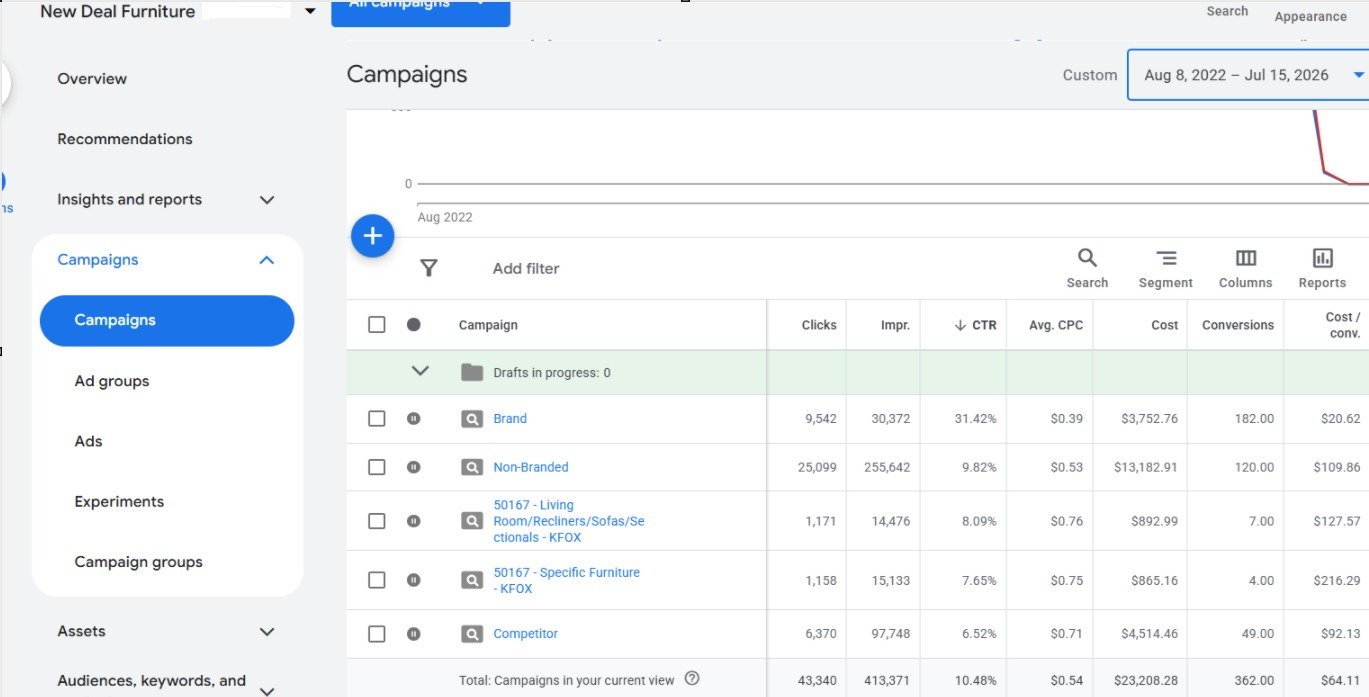
Across both accounts: roughly 98.8K clicks at about a 10% CTR and 551 tracked conversions, from around $48.9K in managed spend.
Why paid sits alongside SEO
SEO is the long game; paid search is how you own the buyer-intent terms today while organic compounds. For these two US furniture retailers, the job was to run efficient Google Search campaigns with a structure that could scale.
The structure
Each account was split into clear campaign types — brand, non-brand, and competitor — so budget, messaging and bids could be managed to intent rather than lumped together. Brand campaigns protected high-converting demand cheaply; non-brand chased new customers at controlled cost; competitor campaigns picked off in-market shoppers.
The numbers
Across both accounts the campaigns delivered roughly 98.8K clicks at about a 10% click-through rate, and 551 tracked conversions from around $48.9K of managed spend.
Account one: brand and non-branded campaigns — 43.3K clicks, ~10.5% CTR, 362 conversions.
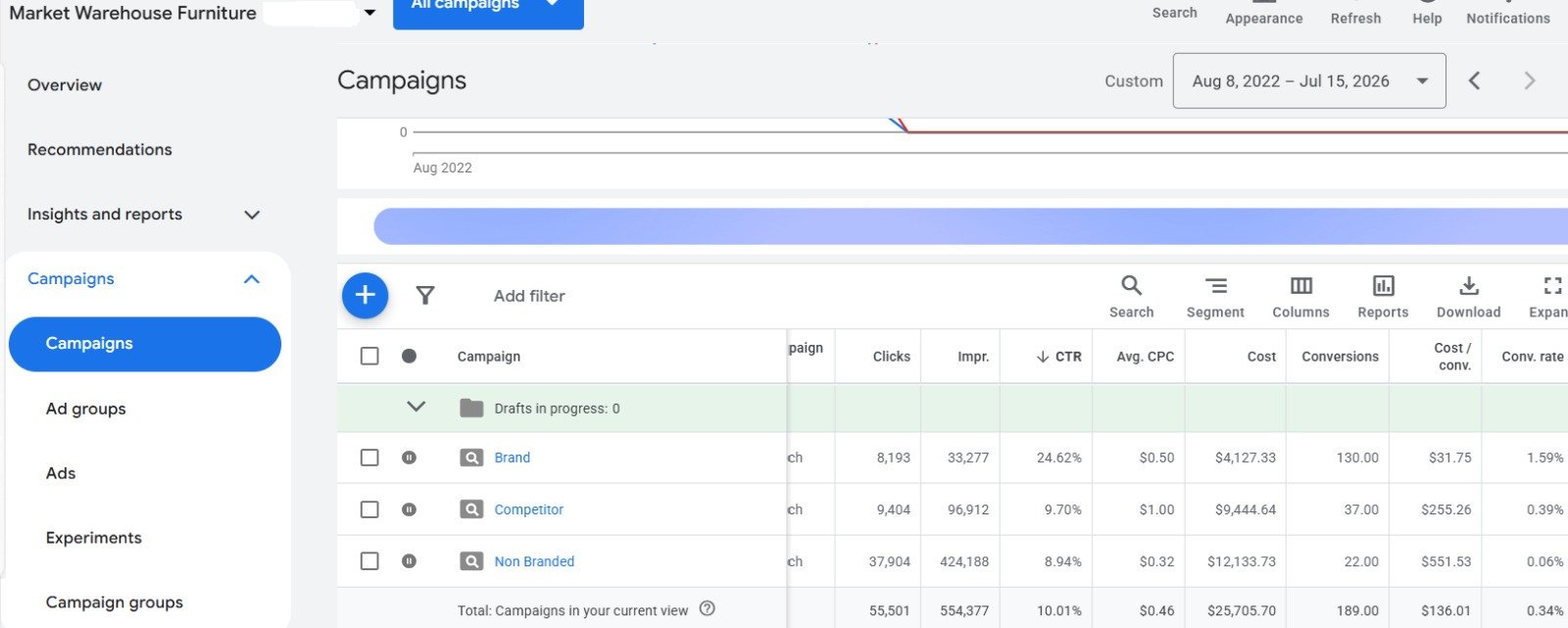
Account two: brand, competitor and non-branded — 55.5K clicks, ~10% CTR, 189 conversions.
The takeaway
Structure is most of the battle in paid search. Separating intent, protecting brand, and watching cost-per-conversion by campaign type is what keeps spend efficient as volume grows — and it gives you real query data you can feed straight back into your SEO and content strategy.